

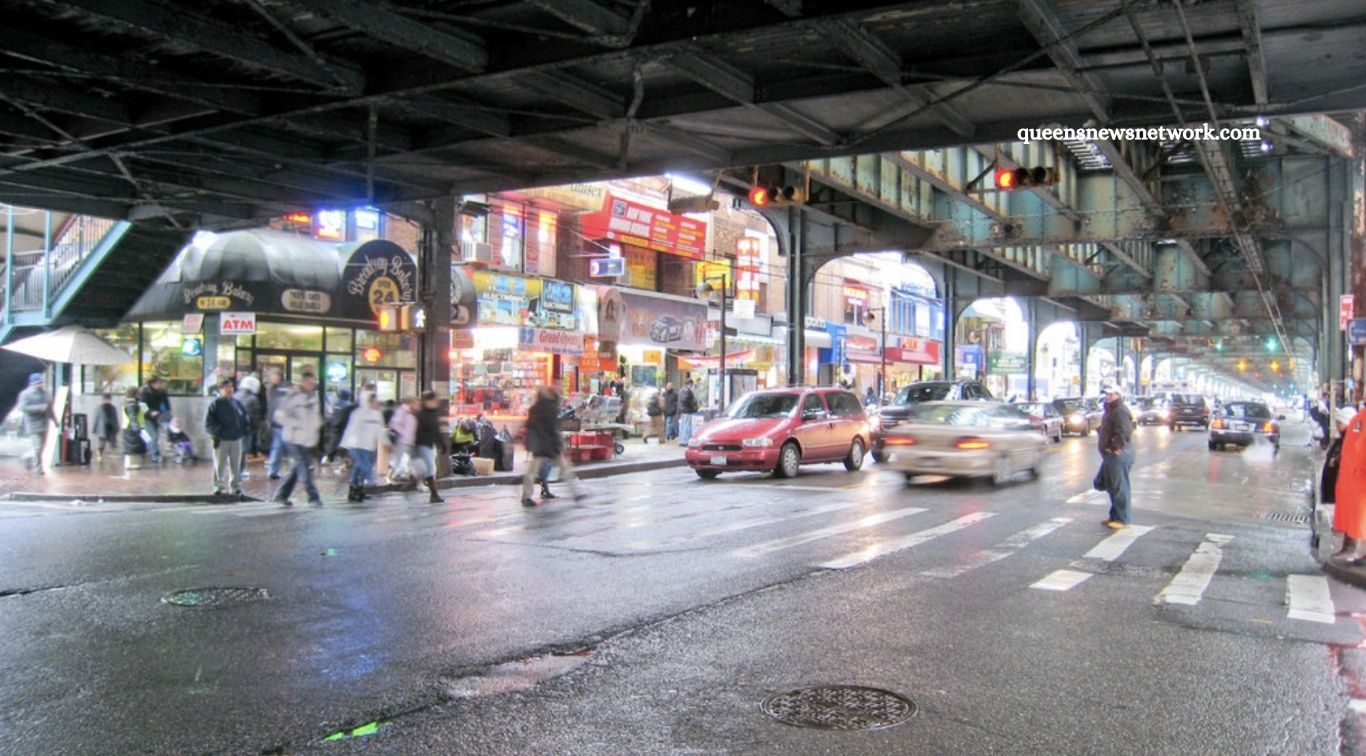
Roosevelt Avenue in Queens is renowned for its vibrant culture, diversity, and deep community roots. Yet in recent years, this iconic corridor has also drawn attention for troubling reasons—allegations of illicit activity, unsafe conditions, and an increased police presence that has unsettled some residents.
Often viewed as a symbol of Queens’ multicultural identity, Roosevelt Avenue has also become a flashpoint in the conversation around public safety and quality of life. In response, local, city, and state leaders have launched efforts to tackle the area’s complex challenges. Both the mayor and governor have deployed police to the corridor, while some elected officials have called for expanded social services to address the root causes of crime.
With City Council District 21—home to Roosevelt Avenue—up for grabs, four Democratic candidates have stepped forward with their own visions for the future of the neighborhood.
Erycka Montoya advocates for fewer police and more investment in community resources. Yanna Henriquez and David Aiken back current Councilmember Francisco Moya’s push for stronger police enforcement. Shanel Thomas-Henry supports a balanced approach, combining law enforcement with supportive services.
Meanwhile, former State Senator Hiram Monserrate, disqualified from the ballot due to a prior corruption conviction, remains a vocal presence. Despite being barred from the race, Monserrate has spent the past year spotlighting Roosevelt Avenue’s issues.
All four Democratic candidates—Montoya, Thomas-Henry, Aiken, and Henriquez—were invited to discuss their platforms. Montoya, Thomas-Henry, and Aiken spoke with the Eagle by phone. Henriquez submitted written responses.
Read More: Queens Council Candidate Uses AI-Generated Campaign Images Does It Matter to Voters?
Erycka Montoya Calls for Holistic, Community-Focused Solutions on Roosevelt Avenue
Backed by the Working Families Party, Erycka Montoya is positioning herself as the progressive voice in the race for City Council District 21. For Montoya, Roosevelt Avenue symbolizes culture, community, and entrepreneurial spirit.
“When I think of Roosevelt Avenue, I think of its liveliness—so many small businesses, amazing food, and incredible diversity,” she said. “I can always find something I’ll enjoy.”
Still, Montoya acknowledges the area faces significant challenges, especially around public safety and cleanliness.
“There’s no doubt Roosevelt has several serious issues,” she said. “Sanitation is a big concern. It’s a dense corridor that needs more frequent pickups and stronger investment.”
Montoya supports the seven-point plan introduced last year by Assemblymembers Catalina Cruz and Steven Raga, along with Councilmember Shekar Krishnan. The proposal includes increased lighting under the elevated 7 train, stricter hotel licensing standards, improved communication with NYPD, expanded sanitation services, enhanced traffic enforcement, and greater support for the neighborhood’s most vulnerable residents.
“We need a comprehensive approach,” Montoya said. “That includes trauma care for victims, infrastructure investment, and real opportunities—so people have alternatives to human trafficking.”
She emphasized the importance of providing housing, job training, and other resources to victims when brothels are shut down. “It’s not enough to just close a location,” she added. “We must ensure survivors get the help they need to rebuild their lives.”
Montoya criticized Mayor Eric Adams’ Operation Restore Roosevelt plan—backed by current Councilmember Francisco Moya—as falling short. “Enforcement without investment is incomplete,” she said. “We need real solutions that address the root causes, not just surface-level crackdowns.”
Yanna Henriquez Backs Strong Public Safety and Housing Reforms on Roosevelt Avenue
District leader Yanna Henriquez brings a direct, unapologetic perspective to the challenges facing Roosevelt Avenue. Closely aligned with current Councilmember Francisco Moya, she doesn’t shy away from what she sees as the corridor’s decline.
“Sad,” Henriquez said. “I see drunks on the corner. I see people rushing home, afraid that ICE may catch them. The heart of what Roosevelt Avenue should mean to our community is missing.”
For Henriquez, the concerns extend beyond public safety. She highlights overcrowded schools and a lack of affordable housing as critical issues District 21 must urgently address.
A vocal supporter of Operation Restore Roosevelt—Mayor Eric Adams’ initiative to increase police presence and enforcement in the area—Henriquez called the plan a “great idea.”
“We need more visible police presence,” she said. “We need public safety personnel who look like us, speak our languages, and understand our community.”
In addition to public safety, Henriquez supports a rezoning plan to create more affordable housing along the Roosevelt corridor. She believes new development could ease the housing crisis while revitalizing the neighborhood.
Reflecting on the work of Councilmember Moya, Henriquez said, “He did the best he could with the resources provided.”
Shanel Thomas-Henry Pushes for Long-Term, Community-Driven Solutions on Roosevelt Avenue
Shanel Thomas-Henry, the top fundraiser in the City Council District 21 race, calls Roosevelt Avenue “the heart of the district.” But she believes that heart has suffered—and restoring its health requires more than surface-level fixes.
“Roosevelt has become something no longer rooted in community pride,” she said. “It’s a corridor that connects our neighborhoods and neighbors, yet all we hear lately are the negative headlines. And rightly so—illegal activity along the entire stretch has gotten out of control.”
Thomas-Henry emphasized the need for solutions that address the root causes of crime and instability. She pointed specifically to economic desperation as a driver behind sex work in the area.
“If a woman turns to prostitution to feed her family or pay the bills, then we need to build systems that offer living-wage jobs and real economic opportunity,” she said.
She supports bringing better infrastructure to Roosevelt Avenue, especially improved lighting, to promote safety and accessibility.
“We need to make sure the avenue is well-lit, well-maintained, and safe for everyone,” she said.
Thomas-Henry backs Operation Restore Roosevelt, the mayor’s law enforcement-led initiative, but she views it as only a starting point.
“It’s a short-term solution,” she said. “We need community policing—officers who are familiar faces, who know the residents and are part of the neighborhood.”
For Thomas-Henry, the path forward lies in collaboration and long-term planning.
“We need to sit down together—residents, leaders, and stakeholders—and build a solution that works for the community in the long run,” she said.
David Aiken Focuses on Small Business and Community Livability on Roosevelt Avenue
Though trailing in fundraising and endorsements, City Council candidate David Aiken brings a clear vision for improving Roosevelt Avenue—one focused on restoring pride, supporting local businesses, and creating a safe, welcoming environment for all.
“Roosevelt Avenue needs real improvement,” Aiken said. “We have to consider both the families who live there and the small businesses that invest their time, money, and livelihoods into the community.”
While acknowledging concerns around prostitution and sanitation, Aiken emphasized their economic impact, particularly on the corridor’s storefronts and workers.
“These businesses are part of the community. They’re trying to build something for themselves and their families,” he said. “We need a solution that protects their ability to thrive.”
Aiken supports Mayor Eric Adams’ Operation Restore Roosevelt initiative and views it as a starting point for broader revitalization.
“It’s a step in the right direction,” he said.
Looking ahead, Aiken hopes to restore Roosevelt Avenue’s reputation as a vibrant, inclusive destination.
“We should celebrate our diversity and culture,” he said. “Let’s build an environment that everyone can enjoy—every day of the week, any time of day.”
District 21 Candidates Reject Federal Immigration Enforcement on Roosevelt Avenue
As concerns rise over aggressive policing along Roosevelt Avenue, many fear it could open the door to federal immigration crackdowns and mass deportations—especially under policies associated with the Trump administration. All four Democratic candidates running for City Council District 21 firmly oppose federal involvement and support New York City’s sanctuary laws.
Shanel Thomas-Henry voiced strong support for immigrant protections, stressing the human toll of fear-based enforcement.
“These individuals came here to build a better life for their families and to escape violence or hardship,” she said. “No one should feel unsafe in their home. Since Trump took office, many have become too afraid to go outside. Children are scared to attend school. People avoid hospitals even when they’re sick, out of fear of deportation. That is not the kind of city we should be.”
Both Yanna Henriquez and Erycka Montoya emphasized the importance of education and empowerment through legal awareness. They called for expanded “know-your-rights” programs and community outreach to help immigrants navigate interactions with law enforcement.
“We need to ensure our communities are informed,” Montoya said. “When people know their rights, they can respond confidently and safely. Everyone deserves to live free from fear and questioning—and I believe that with my whole heart.”
All four candidates agree: Roosevelt Avenue should be a place of safety, not surveillance—and immigration enforcement has no place in local policing.
Frequently Asked Questions
Why is Roosevelt Avenue a key issue in the District 21 City Council race?
Roosevelt Avenue is a central corridor in District 21, known for its cultural vibrancy but also associated with issues like illegal activity, public safety concerns, sanitation problems, and economic inequality. Voters are looking for leadership that can restore pride and safety to the area.
What are the main concerns voters have about Roosevelt Avenue?
Residents frequently cite illegal sex work, poor sanitation, lack of lighting, overcrowding, and increased police activity. Concerns also include the impact on small businesses and fears over federal immigration enforcement.
How does Erycka Montoya plan to address issues on Roosevelt Avenue?
Montoya supports a holistic, community-first approach—favoring fewer police and more investments in social services, trauma care, housing, and job training. She also backs a 7-point plan for safety and infrastructure improvements.
What is Yanna Henriquez’s stance on public safety along Roosevelt Avenue?
Henriquez supports a stronger police presence and backs Mayor Eric Adams’ Operation Restore Roosevelt. She also advocates for more affordable housing and school investments to strengthen the community.
Where does Shanel Thomas-Henry stand on Roosevelt Avenue policing?
Thomas-Henry supports Operation Restore Roosevelt as a short-term solution but believes in long-term strategies that combine community policing, better lighting, and economic opportunities to address root causes of crime.
What are David Aiken’s priorities for Roosevelt Avenue?
Aiken emphasizes support for small businesses, community safety, and improving the livability of Roosevelt Avenue. He backs increased law enforcement while also promoting economic growth and community pride.
Do any candidates support involving federal immigration enforcement?
No. All four Democratic candidates oppose federal immigration enforcement on Roosevelt Avenue and support New York City’s sanctuary city policies. They call for community safety without fear of deportation.
What is Operation Restore Roosevelt?
Operation Restore Roosevelt is a public safety initiative launched by Mayor Eric Adams and supported by Councilmember Francisco Moya. It involves increased NYPD presence along Roosevelt Avenue to target illegal activity and improve safety.
Conclusion
Roosevelt Avenue stands at the crossroads of culture, commerce, and community concern—making it a defining issue in the District 21 City Council race. While each candidate brings a unique perspective, they all agree on one thing: Roosevelt Avenue needs change.
From increased police presence and infrastructure improvements to community-based solutions and deeper investments in social services, the future of Roosevelt Avenue hinges on thoughtful, inclusive leadership. As voters head to the polls, they’ll be choosing more than just a representative—they’ll be shaping the future of one of Queens’ most iconic streets.