

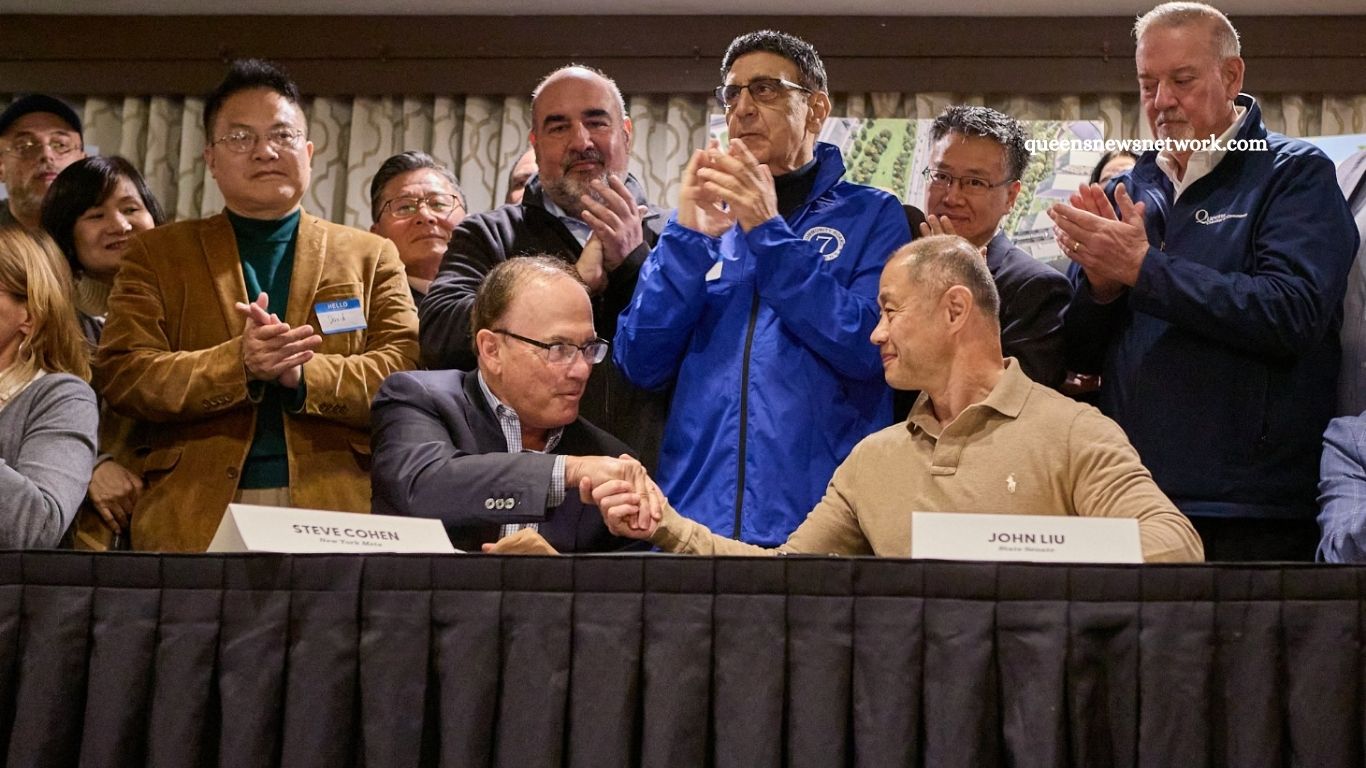
A Senate committee edged closer this week to approving legislation that would enable New York Mets owner Steve Cohen to build a Casino Bill on the Citi Field parking lot. The narrowly divided vote reflects the high stakes around parkland use, local politics, and potential economic gains. As the bill moves to the full Senate, supporters and opponents are preparing for a decisive vote that could reshape Queens’ landscape and set a new precedent for urban development.
Background: From Parking Lot to Metropolitan Park
For decades, the 50 acres surrounding Citi Field functioned solely as an asphalt parking lot. In May, Cohen unveiled plans for “Metropolitan Park,” a mixed-use complex featuring a casino, hotel, food hall, live music venue, and public green space. However, the site’s designation as city-owned parkland complicates any development. State law requires “parkland alienation” legislation before converting designated park space to commercial use. Without such a bill, Cohen cannot include the Citi Field lot in his casino bid.
Read More: Queens Court Confirms BOE Rulings, Disqualifies Multiple Candidates
Introducing the Legislation
State Senator John Liu introduced the parkland alienation bill last month. His district includes roughly 12 acres—or about 20 percent—of the proposed development site. The bill directs the state to release the parking lot from its parkland status, clearing the way for construction if Cohen secures one of three downstate casino licenses later this year. The Gaming Commission expects to award these licenses by December, and Cohen counts himself among nearly a dozen contenders.
Committee Vote: A Narrow Advance
On Tuesday, the Senate Committee on Cities voted 4–3 to advance the bill without recommendation. No member endorsed it outright; instead, four senators moved it forward “without recommendation,” while three opposed. This procedural move allows the bill to reach the Senate floor despite lukewarm support. Advancing without recommendation signals caution but keeps Cohen’s casino plan alive in Albany’s upper house.
Stakeholder Perspectives
Supporters emphasize job creation and community benefits. Karl Rickett, spokesperson for Metropolitan Park, highlighted the project’s promise: “Today’s committee approval brings us one step closer to delivering 25 acres of actual public park space, 23,000 union jobs, new entertainment options, and over $1 billion in community benefits for Queens.”
Opponents argue the costs outweigh potential gains. State Senator Jessica Ramos, whose district covers Corona, Jackson Heights, and East Elmhurst, refused to sponsor the bill after constituents voiced strong opposition. Ramos maintains the community resists a casino in its backyard, citing social and environmental concerns.
Local Lawmaker Dynamics
Typically, Albany defers to the local senator on land-use matters. Ramos held multiple town halls in 2023 and 2024, where residents overwhelmingly rejected a casino. When Ramos declined to introduce parkland alienation legislation, Cohen turned to Liu. Liu’s willingness to carry the bill underscores the complex interplay of local and citywide interests. “The site directly affects my residential and commercial areas in Downtown Flushing,” Liu told the committee. “It’s a hop and skip away.”
The Assembly Track
In the Assembly, freshman member Larinda Hooks introduced a companion bill earlier this year. Hooks replaced retired Jeff Aubry, who first proposed the measure in 2024. So far, the Assembly version has not received a committee hearing. Hooks remains in “active conversations” with leadership to secure a vote, stressing the need for robust community input and enforceable benefit agreements.
The Flushing Skypark Promise
As part of an agreement with Liu, Cohen pledged to study “Flushing Skypark,” a pedestrian bridge over Flushing Creek linking Downtown Flushing to Willets Point. Inspired by Manhattan’s High Line, the proposed bridge aims to improve connectivity and public space. However, details remain vague: cost estimates, land ownership rights, and engineering studies have yet to materialize. If the skypark proves infeasible, Cohen agreed to donate $100 million over ten years to Flushing Meadows Corona Park.
City Council’s Endorsement
Last week, the New York City Council passed a resolution urging the state legislature to approve parkland alienation for Citi Field’s parking lot. The vote signaled broad municipal support, reinforcing Cohen’s case that the underused asphalt could transform into a vibrant urban destination. However, Council resolutions carry persuasive rather than binding power, and Albany’s lawmakers will weigh broader concerns.
Competing Casino Bids
Cohen is not alone in pursuing a downstate casino license. Genting New York, operator of Resorts World Queens, also vies for a license, proposing upgrades to its current racino and nearby development. Genting has secured backing from several South Queens officials, including State Senator Joe Addabbo, who voted to advance Cohen’s bill without recommendation. A license competition could hinge on site readiness, economic impact, and community support.
Economic and Social Implications
A casino at Citi Field promises significant economic impact: new jobs, increased tax revenues, and tourism growth. District-wide, businesses could benefit from higher foot traffic, and community benefit agreements could fund parks, schools, and infrastructure.
Yet critics warn of potential downsides. Social services may strain under problem gambling cases. Traffic congestion and infrastructure burdens could stress local roads. Environmental advocates question reducing impermeable green space in favor of development, even with promised public parkland.
What’s Next? Senate Floor Vote
With committee approval secured, the parkland alienation bill moves to the full Senate. Legislators will debate its merits, weighing hometown concerns against citywide economic arguments. If the Senate passes the bill, it must return to the Assembly and receive gubernatorial approval before Cohen can finalize his casino proposal.
Stakeholders are gearing up for intense lobbying. Community groups plan town halls and letter-writing campaigns. Labor unions advocate for unionized construction and hospitality jobs. Gambling-addiction organizations push for funding safeguards and treatment programs.
Frequently Asked Questions
What is the Cohen Casino Bill?
The Cohen Casino Bill is proposed legislation that would allow billionaire New York Mets owner Steve Cohen to build a large-scale casino and entertainment complex—called Metropolitan Park—on the parking lot adjacent to Citi Field. Since the land is technically city-owned parkland, the bill seeks to “alienate” the land for commercial development.
Why is the bill necessary?
Because the Citi Field parking lot is designated as parkland, New York State law requires a special bill to convert (or “alienate”) it for commercial use. Without this legislation, Cohen’s casino and development project cannot legally proceed on that site.
What is a parkland alienation bill?
A parkland alienation bill is legislation that allows the state to remove the parkland designation from a public space so it can be used for non-park purposes—like building commercial developments, such as a casino.
Who introduced the bill?
The bill was introduced in the New York State Senate by Senator John Liu and in the State Assembly by Assemblymember Larinda Hooks.
What happens next?
The bill now heads to the full New York State Senate for a floor vote. If it passes there, it must also pass the State Assembly and then be signed into law by the Governor of New York.
Why is Senator Jessica Ramos against it?
Senator Ramos says the majority of her constituents oppose building a casino in their neighborhood. She believes the costs (like increased traffic and social harm) outweigh the proposed benefits and has refused to sponsor the bill.
How much of the site is in Senator Liu’s district?
About 12 acres (20%) of the proposed development site falls within Liu’s district. While he acknowledges the project isn’t entirely in his area, he argues it will significantly impact Downtown Flushing, which he represents.
Conclusion
The advancement of the Cohen Casino Bill through the Senate Committee marks a critical turning point in the future of Queens’ development. While the legislation has yet to gain full political backing, its progress signals growing momentum behind Steve Cohen’s ambitious plan to transform Citi Field’s parking lot into a multi-billion-dollar entertainment hub. Supporters tout job creation, economic revitalization, and expanded public spaces, while opponents remain concerned about community disruption, increased traffic, and gambling-related risks.