

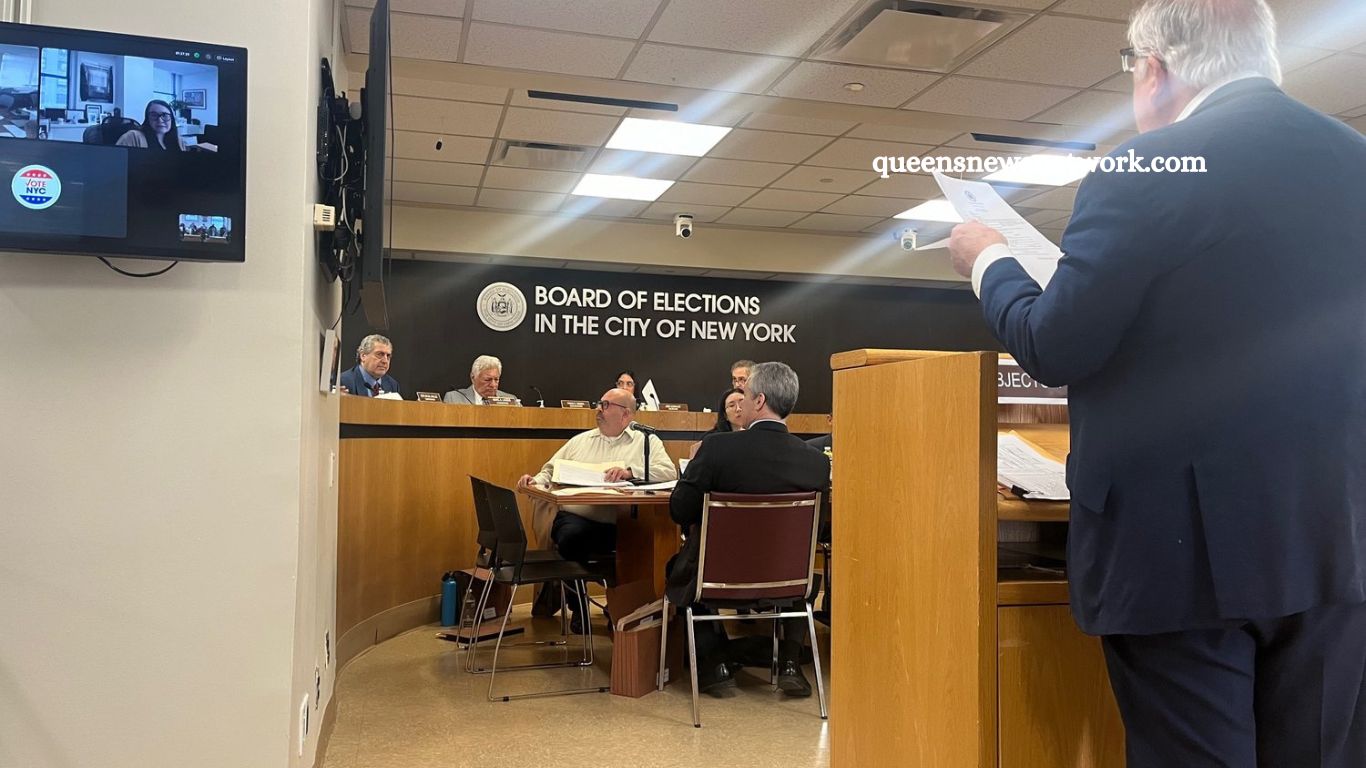
A wave of disqualifications by the New York City Board of Elections (BOE) on Monday has significantly reshaped the 2025 election landscape in Queens. Candidates from both major parties saw their campaigns halted prematurely as the BOE ruled them ineligible to appear on the upcoming primary ballot. The board’s decisions, delivered in a packed meeting room at its Manhattan offices, came after a series of legal objections and challenges to candidate petitions.
With the dust settling from these rulings, several primary races in Queens have either been narrowed or eliminated, bringing early clarity to what voters can expect in the June primaries—and potentially in November’s general elections.
Ballot Battles: Legal Challenges and Disqualifications
Monday’s hearing was part of the BOE’s standard process to review objections to candidate petitions. These objections often come from rival campaigns and can lead to disqualification if candidates fail to meet the strict requirements set by New York election law.
In total, multiple Queens candidates in City Council and Civil Court races were removed from the ballot after their petitions were successfully challenged. While some plan to appeal the decisions, for now, their names will not appear on the ballot.
Read More: Cohen’s Casino Bill Advances in Senate
District 21: Democratic Field Shrinks
The Democratic race to replace term-limited Councilmember Francisco Moya in District 21 was sharply reduced in size. Candidates Sandro Navarro and Hiram Monserrate were both removed from the ballot following BOE rulings.
Navarro, a district director in the office of State Senator and mayoral candidate Jessica Ramos, failed to meet the minimum number of valid petition signatures. His opponent, Yanna Henriquez, who has the backing of the Queens County Democratic Party, filed objections that were upheld by the board. Navarro’s petition fell short by 174 valid signatures.
Monserrate, a former elected official with a controversial past, faced a more complex legal hurdle. The BOE sided with objections from Henriquez and fellow candidate Shanel Thomas-Henry, citing a City Council law specifically enacted to bar Monserrate from seeking office again. Despite being ruled ineligible, Monserrate has vowed to continue his legal battle, with two court cases pending. One seeks to validate his petitions, while the other challenges the legality of the law barring his candidacy.
“Today’s outcome was expected,” Monserrate stated. “We look forward to our upcoming day in court.”
If Monserrate’s appeals fail, the race for the Corona-based district drops to four candidates: Henriquez, Thomas-Henry, David Aiken, and Erycka Montoya.
District 27: Daniels Disqualified, Williams Unopposed
In Southeast Queens, the primary contest for City Council District 27 has been called off after Vera Daniels’ petition was deemed insufficient. Falling 195 signatures short of the required threshold, Daniels was removed from the ballot, leaving incumbent Councilmember Nantasha Williams without a primary challenger.
Daniels criticized the objections but has not ruled out further legal action. “We’re evaluating the deficiencies cited and considering our options moving forward,” she said.
Queens Civil Court: Fraudulent Signatures Lead to Disqualification
Queens Civil Court candidate Philip Grant was also disqualified after the BOE found evidence of forged signatures on his petition. The document included a page where nearly all signatures appeared to be falsified—a revelation first reported by the Queens Eagle.
Attorneys argued that four pages of signatures validated by a single witness should be invalidated, resulting in Grant being removed from the race. While other candidates listed on the same petition sheet were not directly named in the objection, the finding raises broader questions about petition integrity.
District 28: Wills Survives Challenge, Race Moves Forward
In the race for Council District 28, former Councilmember Ruben Wills faced objections from opponent Tyrell Hankerson but managed to remain on the ballot. He joins a competitive field that includes Hankerson, Japneet Singh, Romeo Hitlall, and Latoya LeGrand. The winner will succeed term-limited Council Speaker Adrienne Adams.
Republican Races Dwindle Across Queens
Republican candidates in several districts also faced setbacks following the BOE’s rulings. Three GOP primaries that once looked viable have now been eliminated, clearing the path for uncontested Republican nominees in multiple areas.
- In District 25, Republican Shah Haque was removed from the ballot, as was Supreet McGrath in District 29. Their respective opponents, Ramses Frias and John David Rinaldi, will now run unopposed in the June Republican primaries.
- In the general election, Frias will face either incumbent Democrat Shekar Krishnan or challenger Richard Pacheco, depending on the outcome of the Democratic primary. Rinaldi is set to challenge incumbent Councilmember Lynn Schulman in the fall.
- In District 21, Republican hopefuls Joseph Chou and Allen Wang were both disqualified, eliminating their primary. However, Wang will still appear on the Conservative Party line in November.
Additional GOP Disqualifications Further Narrow Field
Several other Republican candidates across Queens were also removed from the ballot, essentially cancelling expected general election contests in key districts:
Giovanni Enrique Franco, who aimed to challenge the Democratic winner in District 21, was disqualified.
Bernard Chow, who sought to face Councilmember Linda Lee, was taken off the ballot.
Andrew Okunfeff, planning to run against Councilmember Jennifer Gutierrez, also saw his campaign end with the BOE ruling.
These disqualifications significantly diminish Republican representation on Queens ballots and suggest that Democrats will maintain a strong advantage heading into the general election.
Legal Appeals May Shift Landscape Again
Although the BOE’s rulings are decisive for now, several candidates plan to file legal appeals in hopes of getting back on the ballot. The final candidate list may still change, depending on how the courts rule in the coming weeks.
Election law in New York is notoriously strict, and even minor errors in petition submissions—like missing dates, incorrect witness information, or duplicate signatures—can be grounds for disqualification.
While some candidates argue these laws are overly rigid and discourage democratic participation, others say they help maintain accountability and prevent fraudulent or disorganized campaigns from cluttering the ballot.
What’s Next for Queens Voters
With the field narrowed, voters in Queens can expect a less crowded primary season in June. Several high-profile Democratic races remain competitive, while most Republican candidates will move directly to the general election or have already exited the race.
For now, candidates who survived the BOE’s review will focus on fundraising, community outreach, and policy messaging as they prepare for the campaign stretch. Meanwhile, disqualified candidates face tight timelines to mount legal challenges before ballots are finalized.
Frequently Asked Questions
What does “off the ballot” mean in the context of the Queens elections?
“Off the ballot” refers to candidates who have been disqualified from appearing on the official election ballot due to legal objections or petition issues. These rulings are made by the New York City Board of Elections after reviewing submitted petitions and challenges.
Why were so many candidates removed from the Queens primary ballot?
Candidates were removed primarily due to invalid or insufficient petition signatures. In some cases, legal technicalities, such as city laws prohibiting certain individuals from running, also played a role. Objections were often filed by rival campaigns.
Who decides whether a candidate stays on or is removed from the ballot?
The New York City Board of Elections (BOE) is responsible for reviewing objections to petitions and making rulings on candidate eligibility. Their decisions are based on strict compliance with election laws.
Can disqualified candidates appeal the BOE’s ruling?
Yes, candidates who are removed from the ballot can file legal appeals in court. Some, like Hiram Monserrate and Vera Daniels, have already indicated plans to challenge the BOE’s decisions.
How did petition signatures affect candidate eligibility?
Candidates are required to gather a minimum number of valid signatures from registered voters in their district. If enough signatures are ruled invalid—due to duplication, forgery, or other technical errors—the candidate can be disqualified.
What law disqualified Hiram Monserrate from running?
A special City Council law was passed specifically to bar Monserrate, a former councilmember with a criminal conviction, from seeking office. The BOE upheld this law in their ruling, though Monserrate is contesting it in court.
Which Queens City Council races were impacted the most?
District 21 saw the most significant shake-up, with two Democratic candidates removed. District 27’s primary was canceled entirely, and several Republican races across the borough were eliminated due to petition issues.
Conclusion
The recent rulings by the New York City Board of Elections have significantly reshaped the 2025 Queens political landscape, cutting short the campaigns of several candidates and clarifying the field ahead of the June primaries. From petition errors to legal barriers, the decisions highlight the critical importance of strict compliance with election laws and the high stakes involved in every step of the electoral process.