

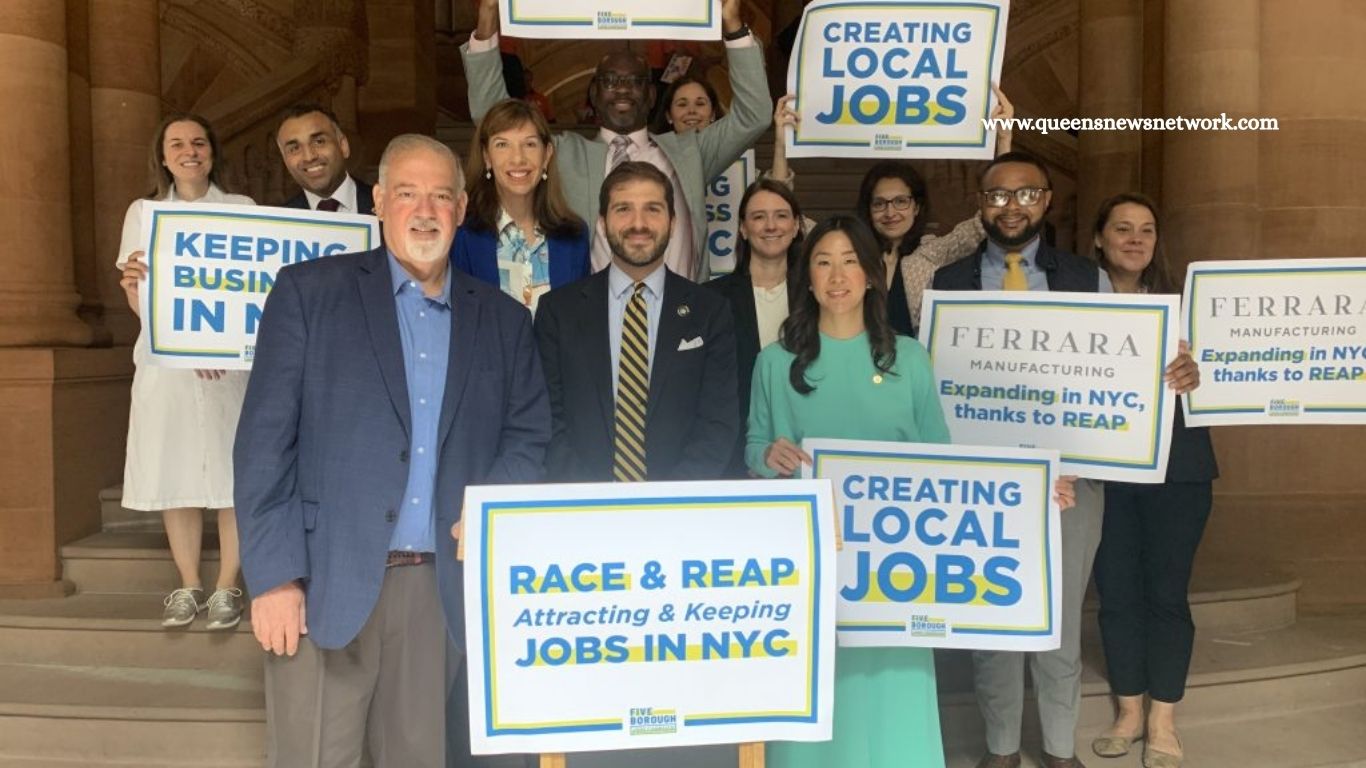
Amid rising costs and ongoing economic challenges for small businesses, Queens Leaders joined state legislators, city officials, and economic advocates last week in Albany to support a legislative package aimed at sustaining job growth and boosting New York City’s economy.
At the heart of this advocacy is a push to extend and enhance key tax incentive programs: the Relocation and Employment Assistance Program (REAP), Lower Manhattan REAP (LM-REAP), and the newly proposed Relocation Assistance Credit for Employees (RACE). These programs are part of Senate Bill S8063 and Assembly Bill A8676, which aim to address commercial vacancies, support small businesses, and maintain New York’s competitive edge.
Legislative Support Gathers in Albany
On May 28, State Senator Andrew Gounardes and Assemblymember Grace Lee led a press conference joined by the Queens Chamber of Commerce, representatives from Mayor Eric Adams’ administration, and members of the Five Borough Jobs Campaign.
“Businesses are severely affected by the affordability crisis,” said Tom Grech, President of the Queens Chamber of Commerce and Co-Chair of the Five Borough Jobs Campaign. “If small businesses fail, the entire community suffers. SB8063 presents practical solutions that offer businesses the support they need to stay, grow, and hire local talent.”
Read More: Family of Queens Teen Win Rozario Sues NYPD Over Fatal Shooting During Mental Health Crisis
What Is the REAP Program?
REAP offers eligible companies a $3,000 annual tax credit per employee for up to 12 years when relocating from outside NYC or from Manhattan below 96th Street to designated revitalization zones like those in Queens. Businesses outside these zones can still claim $1,000 per employee per year.
In Long Island City, at least 12 businesses have utilized REAP to support the creation of more than 2,600 jobs.
“This is a success story,” said Laura Rothrock, President of the Long Island City Partnership. “Programs like REAP helped companies such as Ferrara Manufacturing stay in New York and grow.”
Economic Impact of REAP and LM-REAP
First implemented in 1987, REAP and its post-9/11 counterpart LM-REAP have helped attract a wide range of businesses—from biotech to consulting—to NYC’s commercial districts. Nearly 16,000 employees have benefited from these incentives. In FY25 alone, 178 firms claimed $26.1 million in credits.
The legislation seeks to extend REAP and LM-REAP for three more years while introducing transparency and reporting standards to assess program effectiveness. With NYC office vacancy rates at record highs and the average job supported through REAP offering a median salary of $91,371, officials argue that renewing these programs is critical.
Introducing RACE: A New Tool for Growth
The proposed Relocation Assistance Credit for Employees (RACE) is designed to attract out-of-state businesses to NYC, particularly to underused office spaces. If passed, RACE could generate an estimated $385 million in economic return by encouraging new employers to establish operations in the city.
Real Business Success Stories
Ferrara Manufacturing, a Queens-based apparel company, attributes its successful expansion to the REAP program.
“We’re not asking for handouts—we’re asking for a fair shot,” said Gabrielle Ferrara Rose, COO and President. “REAP gave us that shot. It allowed us to grow and stay committed to the city we love.”
Small Business at the Heart of the Fight
With about 90% of Queens’ 57,000 small businesses employing 10 or fewer people, these incentives aren’t just beneficial—they’re vital.
“Programs like these help Brooklynites and all New Yorkers find jobs closer to home,” said Senator Gounardes. “They’ve revitalized commercial corridors and helped breathe life into once-vacant office spaces.”
Urgency Grows as Expiration Date Nears
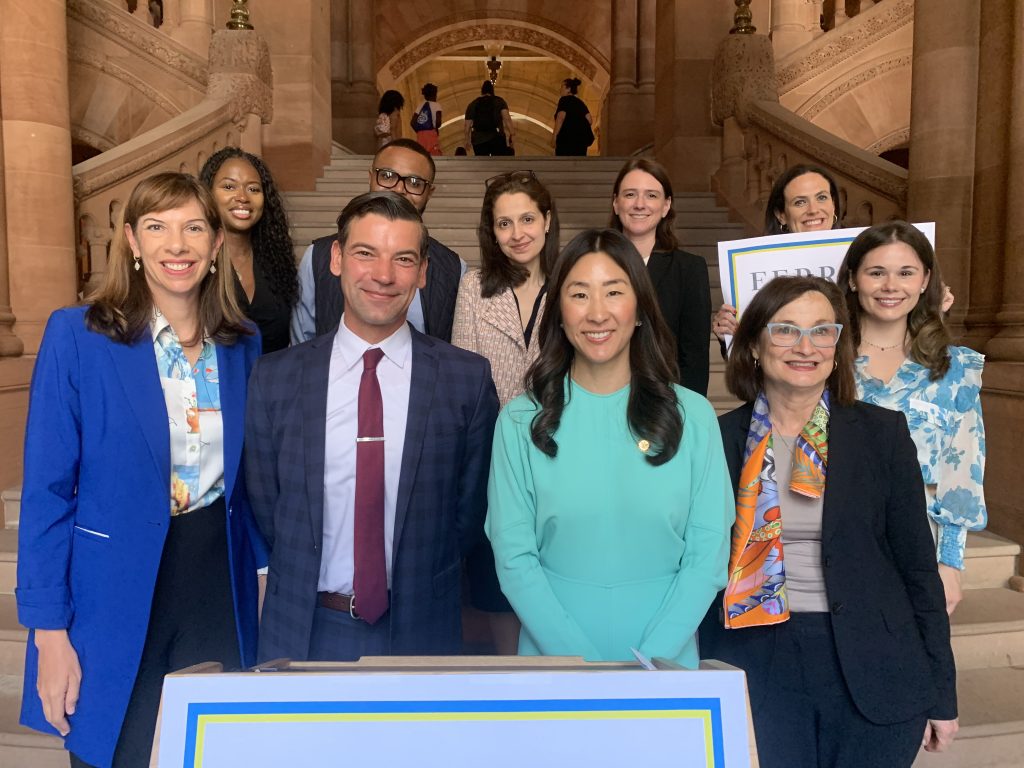
The REAP and LM-REAP programs are set to expire soon. Members of the Five Borough Jobs Campaign, a coalition of business and development organizations, met with lawmakers in Albany to stress the importance of swift legislative action.
“Lower Manhattan is dynamic, but at risk due to historic vacancy rates,” said Assemblymember Grace Lee. “Programs like LM-REAP and RACE are essential to filling these spaces, creating jobs, and sustaining local economies.”
Frequently Asked Questions
What is the REAP program?
REAP is a New York City tax incentive that offers businesses up to $3,000 per employee annually for 12 years if they relocate to designated revitalization areas.
Who qualifies for REAP?
Businesses relocating from outside NYC or Manhattan below 96th Street to specific areas in the outer boroughs, including Queens, may qualify.
How does LM-REAP differ from REAP?
LM-REAP targets commercial revitalization in Lower Manhattan, introduced to aid recovery after 9/11.
What is RACE?
The Relocation Assistance Credit for Employees (RACE) is a new initiative to attract out-of-state businesses and utilize vacant office space.
Why are these programs important for Queens?
They support small businesses, create local jobs, and help maintain economic vitality in commercial zones.
How many businesses have benefited from REAP?
To date, at least 178 firms and nearly 16,000 employees have benefited, including 2,600 jobs created in Long Island City alone.
When will REAP and LM-REAP expire?
Without legislative renewal, these programs are scheduled to expire this month.
Where can I learn more?
Visit tinyurl.com/reapnyc or fiveboroughjobs.com for more information.
Conclusion
As New York City continues to recover from the pandemic’s lasting impacts, ensuring the survival and success of small businesses is more important than ever. The REAP, LM-REAP, and RACE programs are proven tools to combat commercial vacancies, support job creation, and foster equitable growth across the boroughs.
With legislative deadlines fast approaching, city and state leaders, along with business advocates, are urging swift passage of SB8063 and A8676. These incentives aren’t just policy—they’re a promise to the hardworking entrepreneurs and communities driving New York City forward.