

A deepening divide between the New York City Council and Mayor Eric Adams’ administration is threatening to derail the long-awaited closure of Rikers Island, with both sides locked in a tense standoff over how and when to move forward with shuttering the notorious jail complex.
During a contentious City Council hearing on Wednesday, the mayor’s office and council members sparred over the findings of a new report by the Independent Rikers Commission, which painted a grim picture of the city’s lack of progress in meeting the 2027 legal deadline to close the complex. While both sides acknowledged the timeline is no longer feasible, they presented opposing paths for what comes next.
Commission Blames Lack of Willpower
The Independent Rikers Commission, reassembled in 2023 by Council Speaker Adrienne Adams, issued its long-awaited report last month. The findings were damning: a lack of urgency, inadequate leadership, and minimal political will have rendered the 2027 deadline practically impossible.
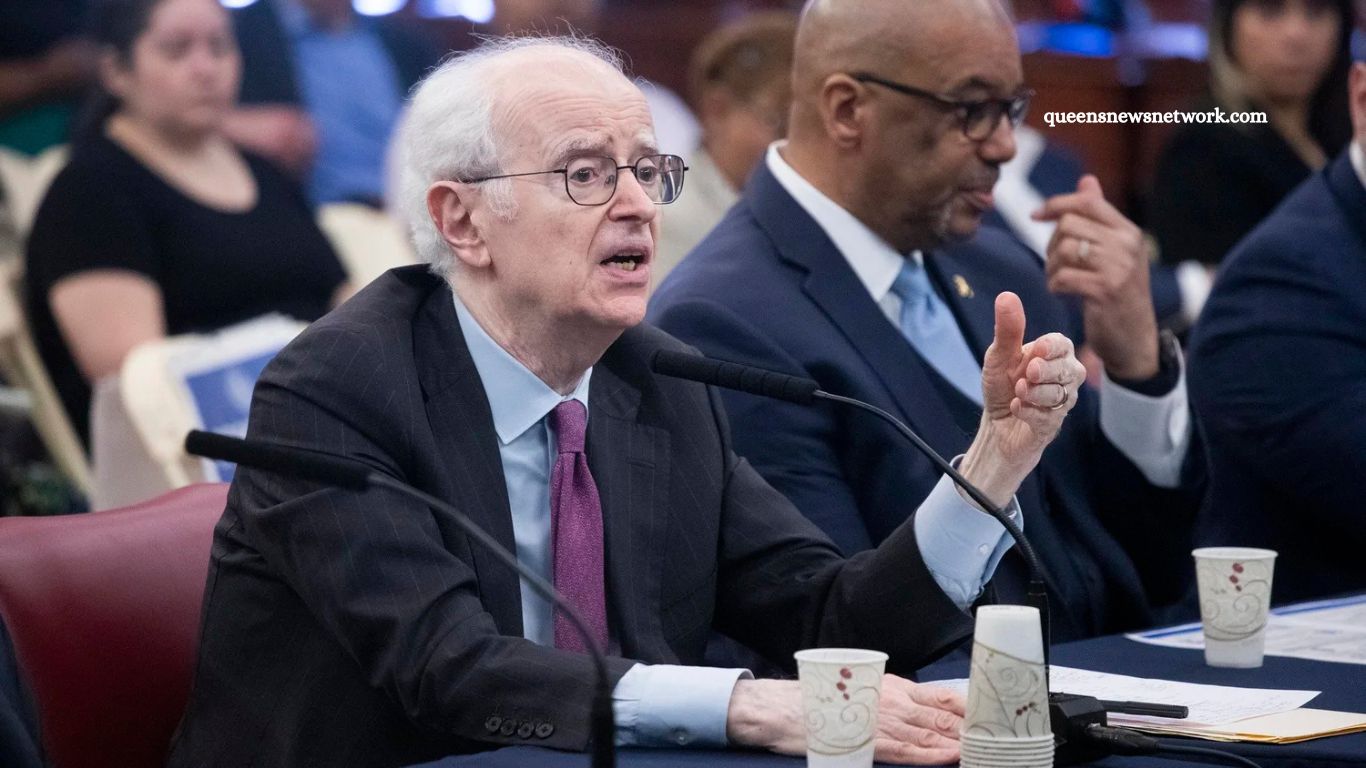
At the hearing, commission chair and former New York State Chief Judge Jonathan Lippman emphasized the need for real commitment before any discussion of extending the deadline. “The statutory deadline of August 2027 to close Rikers should not be legally extended,” Lippman told lawmakers. “Only when the required commitment and action is demonstrated should an extension be considered.”
Read More: Attorneys Accuse Queens Judicial Candidate of Ballot Petition Fraud
He called the jail “a stain on the soul of our city” and urged city leaders to act decisively. “Now is the time for strong leadership by all present and future office holders to close Rikers as soon as humanly possible,” he said.
Mayor’s Office Pushes for Legal Extension
Despite the commission’s recommendations, representatives from the mayor’s office pushed for a legislative amendment to delay the closure. Deanna Logan, Director of the Mayor’s Office of Criminal Justice, echoed the commission’s conclusion that the 2027 deadline was unrealistic.
“We are asking the Council to work with the administration to amend the law to provide a more obtainable timeline,” Logan said, noting construction delays and population challenges that make closure within the original timeframe unattainable.
The mayor’s office, however, failed to propose a detailed alternative timeline or framework for accelerating construction or reducing the jail population.
Council Introduces Bills to Accelerate Closure
The Council, rejecting the idea of extending the deadline without concrete commitments, responded with legislative action. Several new bills were introduced Wednesday, directly based on recommendations from the commission’s report. The most notable among them proposed the creation of an “Office of the Rikers Island Closure Coordinator,” tasked with overseeing and coordinating every element of the transition from Rikers to a borough-based jail system.
Council Speaker Adrienne Adams, who has made closing Rikers a central part of her legislative agenda — and is reportedly eyeing a mayoral run — emphasized the need for a proactive, collaborative approach.
“During this administration, the Council has lacked a committed and willing partner in City Hall,” she said. “Success requires partnership and close collaboration among all stakeholders, and the mayoral administration must be willing to take concrete steps to implement this blueprint.”
Mayor’s Competing Proposal Raises Concerns
While the Council advances legislation aligned with the commission’s plan, Mayor Adams appears to be following his own path. Shortly after the commission released its findings, Adams announced that his first deputy mayor, Randy Mastro, would explore the creation of a jail facility exclusively for detainees with mental health diagnoses — a group that makes up nearly 50% of the Rikers population.
However, Adams has provided no details on the proposed facility — including whether it would replace one of the four borough-based jails or serve as an additional site. There’s no information on the capacity, construction timeline, cost, or how the facility would fit into the broader decarceration strategy. This uncertainty has raised red flags among advocates and lawmakers who see it as a diversion from the city’s legal and moral obligation to shut Rikers.
Crucially, the mayor’s proposal was not even mentioned during Wednesday’s four-and-a-half-hour hearing — an omission that further highlighted the growing disconnect between City Hall and the Council.
Public Safety and Accountability at Stake
The urgency of closing Rikers is underscored by its devastating human toll. More than 100 people have died in the city’s jail system over the past decade, including five so far in 2025 — already matching last year’s total.
Advocates argue that each delay allows conditions to worsen inside the facility, which has long been plagued by violence, neglect, and mismanagement. Despite the closure plan originally being set in motion under former Mayor Bill de Blasio, critics say Adams has failed to take the necessary steps to keep the project on track.
Council leaders are now demanding greater transparency, detailed timelines, and measurable benchmarks for progress. The proposed Office of Rikers Closure Coordinator would serve as a central authority to manage those efforts, coordinate between agencies, and ensure accountability.
A Legal and Political Tipping Point
With the legal deadline looming and trust eroding between the Council and the mayor’s office, the future of the Rikers closure effort is at a critical juncture. While both sides agree on the need for reform, their methods — and motivations — remain in conflict.
For Speaker Adams and the Council, the closure of Rikers is a moral and civic imperative. For Mayor Adams, it seems to be a logistical challenge weighed against broader public safety concerns and budget realities.
Unless a middle ground is found, the city risks not only missing the closure deadline but losing public confidence in its ability to deliver long-promised reforms. As the debate intensifies, one thing remains clear: Rikers Island, long a symbol of New York’s troubled justice system, will remain a political and humanitarian flashpoint until decisive, unified action is taken.
Frequently Asked Questions
What is Rikers Island and why is it being closed?
Rikers Island is New York City’s main jail complex, long criticized for unsafe conditions, human rights abuses, and mismanagement. A 2019 City Council law mandates its closure by 2027, replacing it with smaller, borough-based jails as part of a justice reform initiative.
Why are the City Council and Mayor’s Office clashing over the closure?
The Council and Mayor Eric Adams’ administration disagree on how to meet the legal 2027 closure deadline. The Council wants to stay on track and demands transparency and oversight. The mayor’s office argues the deadline is unrealistic and seeks legislative changes to extend it.
What did the Independent Rikers Commission report say?
The Commission’s 2024 report found the city is far behind schedule due to a lack of political will, poor planning, and construction delays. It called on city leadership to recommit to the closure plan before discussing any extension of the deadline.
What new legislation has the City Council proposed?
The Council introduced a package of bills based on the Commission’s recommendations, including creating an independent Office of the Rikers Island Closure Coordinator to oversee progress, ensure accountability, and centralize planning across agencies.
What is Mayor Adams’ proposed alternative?
Mayor Adams has suggested creating a separate jail facility specifically for detainees with mental health conditions, who make up a significant portion of the Rikers population. However, the plan lacks details and has raised concerns about delaying the existing closure framework.
Is the 2027 deadline still achievable?
Experts, including the Commission, say the 2027 deadline is no longer feasible due to missed benchmarks. However, they urge the city not to legally extend the deadline without firm, demonstrated progress toward closure.
What happens if Rikers doesn’t close by 2027?
Failure to close Rikers by 2027 would violate city law and further erode public trust. It could also prompt legal challenges and extend the human toll in a jail system already marked by high death rates and severe conditions.
Conclusion
The clash between the City Council and Mayor’s Office over the future of Rikers Island underscores a broader struggle between political will and institutional inertia. While both sides agree that the jail complex must eventually close, their conflicting timelines, priorities, and strategies threaten to stall meaningful progress. With lives at stake and public trust on the line, decisive, transparent, and unified leadership is critical.