


Saving Finnley Ashley Merchant and her husband, Mark, put their baby shower, family hospital visits, and welcome-home party on hold. “I wasn’t sure what the outcome would be, so we stayed quiet,” Ashley recalls. “For a long time, things didn’t feel normal or happy.”
Trouble began just eight weeks into the pregnancy when an ultrasound revealed a risk of chromosomal, structural, or genetic issues. Living in Maine with their first child, Emmett, the couple searched for specialists. Recommendations pointed them to Dr. Julianne Lauring, a maternal-fetal medicine expert at NewYork-Presbyterian/Weill Cornell Medical Center. During a Thanksgiving trip to New York in 2023, Ashley scheduled a consultation.
“As soon as I performed the bedside ultrasound, I knew we were facing serious complications,” says Dr. Lauring. “Ashley asked us to do everything possible to give her baby a chance.”
Further tests confirmed the baby had a large lymphatic malformation a rare, non-cancerous mass formed by abnormal lymphatic vessels. The scans showed it stretching across the back, armpit, neck, and throat, blocking the airway.
“Dr. Lauring was honest with me,” Ashley says. “She gave us hope, even when nothing felt certain. She suggested naming the baby so we could connect with him. We chose Finnley and announced his name at Christmas.”
A Rare and Complex Surgery
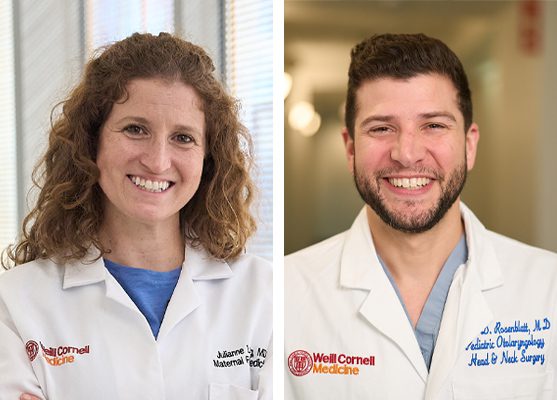
One of Finnley’s masses was in his neck, prompting Dr. Julianne Lauring to consult Dr. Steven Rosenblatt, a pediatric otolaryngologist at NewYork-Presbyterian Komansky Children’s Hospital and Weill Cornell Medicine. “It was among the most complex lymphatic malformations I’ve seen,” says Dr. Rosenblatt. “Most cases in the head and neck don’t block the airway, but Finnley’s scans showed a severe obstruction. We needed an EXIT procedure to keep him safe.”
An EXIT procedure short for ex utero intrapartum treatment is used when a newborn is expected to struggle with breathing. Normally, a baby shifts from receiving oxygen through the placenta to breathing independently at birth. But if the airway is blocked, survival is at risk.
In Finnley’s case, surgeons planned a C-section, partially delivering his head, shoulder, neck, and chest while leaving the rest of his body in the uterus. “The placenta keeps the baby alive while we secure the airway,” explains Dr. Rosenblatt.
The operation carried risks for both mother and child. “With the uterus open, the greatest danger for Ashley was severe bleeding,” says Dr. Lauring. “She could have required intensive care, and in rare cases, mothers don’t survive.”
Finnley’s delivery marked the first EXIT procedure at NewYork-Presbyterian/Weill Cornell Medical Center in 10 years.
Read More: Do Supplements Harm Your Liver?
Inside the Delivery Room

To prepare for the EXIT procedure, Dr. Julianne Lauring organized monthly planning sessions with a multidisciplinary team that included specialists in anesthesia, neonatology, otolaryngology, pediatric surgery, hematology, and nursing. “NewYork-Presbyterian is uniquely suited for cases like this,” she explains. “We brought every expert together and even ran simulations so the team would be ready if Ashley went into labor early.”
Because of the risks, doctors scheduled the EXIT procedure for 35 weeks — far enough along for Finnley’s development but early enough to reduce the chance of spontaneous labor. For Ashley, the wait was terrifying. “Mark and I had to prepare for the possibility that I wouldn’t make it,” she recalls. “I even wrote a note to Emmett telling him how much I love him.”
On surgery day, the operating room filled with nearly 45 specialists. “I’ve never seen a pre-op huddle that large,” says Dr. Lauring. Once Ashley was under general anesthesia, the obstetrics team began the C-section. Time was critical. “We had about 30 to 45 minutes to secure the airway before maternal-fetal circulation failed,” explains Dr. Rosenblatt. “If intubation didn’t work, we were prepared to surgically access the airway through the neck.”
As Finnley was partially delivered, anesthesiologists administered medication while neonatologists placed monitors. Dr. Lauring steadied him as Dr. Rosenblatt used a scope to expose the airway. “The moment I saw his larynx, I knew I could intubate,” he recalls. “‘I have the airway,’ I called out, and everyone cheered.”
With Finnley safely breathing, the team completed the C-section and cut the cord. The two-hour surgery was a success. “Being able to tell Ashley her baby was alive was incredible,” says Dr. Lauring. “It was truly an unforgettable moment.”
New Treatments, Big Progress
The day after the EXIT procedure, Finnley underwent a tracheostomy to secure his airway and received a feeding tube to help him grow. Over the next four months, he needed several minimally invasive sclerotherapy treatments to shrink the lymphatic malformation, since these masses usually can’t be surgically removed.
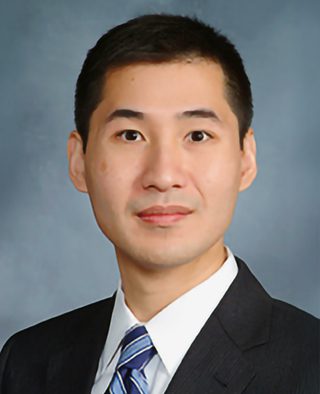
Dr. Bradley Pua, a vascular and interventional radiologist at NewYork-Presbyterian/Weill Cornell, specializes in this procedure. Using a catheter, he drains fluid from the mass and injects medication that scars the tissue, preventing regrowth. “It’s like deflating a water balloon and sealing it shut,” explains Dr. Steven Rosenblatt.
Finnley’s case was unusually complex. The mass spread across his neck, underarm, and airway, threatening his ability to breathe. “Our first priority was restoring his breath,” says Dr. Pua. To reach the mass in Finnley’s throat safely, Dr. Pua and Dr. Rosenblatt worked together, accessing the lesion through his mouth rather than risk vital arteries and nerves in the neck.
The results came quickly. “After the first treatment, we saw a big difference in the size of the mass,” says Mark. By five months, Finnley was meeting milestones: grabbing objects, trying to roll over, and letting out his first cry — finally able to meet his big brother, Emmett.
“Finnley is responding incredibly well, but his condition will require ongoing care,” notes Dr. Pua. “The good news is these treatments are outpatient, giving him the chance to heal and thrive at home.”
A Tiny Hero

At six months old, Finnley finally came home. Though he still had a tracheostomy tube to keep his airway clear, he was thriving growing, hitting milestones, and making remarkable progress.
“Our NewYork-Presbyterian team never gives up,” says Ashley. “No matter the challenge, they always find the exact right care for Finnley.”
Ashley kept a daily log of Finnley’s accomplishments, from small wins like wearing a onesie to major milestones such as coming off the ventilator. “Now I read those notes constantly and marvel at how far he’s come,” she says.
Dr. Lauring reflects on the journey with gratitude: “Ashley went from uncertainty to complete trust in us, and seeing Finnley thrive was deeply rewarding. We bonded over the course of her pregnancy, and every step was meaningful.”
The family is now settled in a new home near Ashley’s relatives. Finnley’s first birthday was a long-awaited celebration with friends and family. The Olympic-themed party featured matching t-shirts, balloons, and a banner showing monthly photos of Finnley’s growth. “Today honors Finnley’s short but remarkable life,” Ashley said. “He conquers challenges, defies odds, and is so worth celebrating.”
Frequently Asked Questions
What is an EXIT procedure?
EXIT (ex utero intrapartum treatment) is a rare surgical technique used when a newborn may have airway obstruction at birth. The baby is partially delivered via C-section while still connected to the placenta, allowing doctors time to secure the airway safely.
Why was Finnley’s case considered complex?
Finnley had a large lymphatic malformation extending across his back, neck, armpit, and throat, blocking his airway. This rare condition required a coordinated, multidisciplinary approach with pediatric surgeons, anesthesiologists, neonatologists, and other specialists.
What is sclerotherapy and how does it help?
Sclerotherapy is a minimally invasive treatment that shrinks lymphatic malformations. Doctors drain fluid from the mass and inject medication that scars the tissue, preventing regrowth. It allows ongoing outpatient care without prolonged hospital stays.
What is a lymphatic malformation?
A lymphatic malformation is a non-cancerous growth formed by abnormal lymphatic vessels. While not cancerous, it can cause serious complications, such as airway obstruction, if located near vital structures.
What kind of follow-up care does Finnley need?
Finnley continues outpatient treatments to manage his lymphatic malformation. Regular monitoring ensures his airway remains clear, and he receives care to support growth and development milestones.
Can parents prepare for rare procedures like this?
Yes. Keeping a detailed log of milestones and victories, maintaining open communication with the care team, and understanding the procedure can help families manage uncertainty and track progress.
How does a multidisciplinary team help in complex cases?
Collaboration among specialists in maternal-fetal medicine, neonatology, surgery, anesthesia, and nursing ensures every aspect of the mother and baby’s care is addressed, improving outcomes in high-risk cases.
Conclusion
Finnley’s journey highlights the power of expert, coordinated care and the resilience of families facing rare medical challenges. From a complex prenatal diagnosis to a successful EXIT procedure and ongoing treatments, his story is a testament to innovation, teamwork, and hope. Thanks to the dedication of the NewYork-Presbyterian care team, Finnley is thriving at home, reaching milestones, and inspiring everyone around him.