

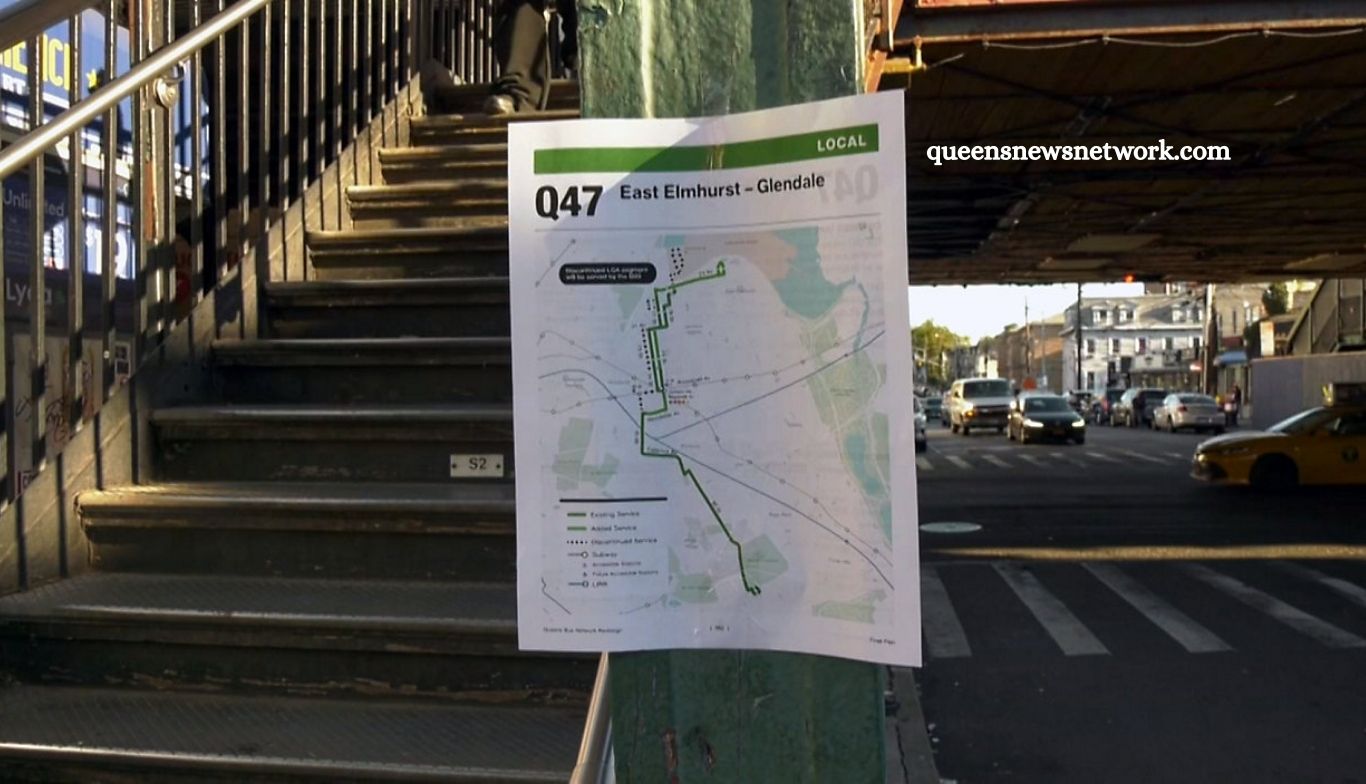
The Metropolitan Transportation Authority (MTA) rolled out the second phase of its ambitious Queens bus network redesign on Sunday, marking another step in the city’s largest transit overhaul in decades. To help riders adapt, MTA ambassadors were stationed at key bus stops throughout Queens, distributing pamphlets and answering questions about the new routes.
For many residents, these ambassadors became an essential lifeline on day one of the changes. Riders were greeted with updated maps, personalized directions, and reassurances that the redesign aims to make travel faster and more reliable.
One of those riders was Nancy Rappe, a longtime Queens resident who takes the Q47 bus to church every Sunday. But this week, her usual ride was no longer running as expected.
“I usually take the bus going there, which is very easy for us,” Rappe said. “This morning, I found out it’s been rerouted. An ambassador helped me figure out another way. It’s inconvenient because this is where we’re used to waiting, but if it serves more people better, I understand.”
Her experience reflects the dual reality of the redesign: short-term disruption, with the promise of long-term improvements for hundreds of thousands of riders.
Read More: Break Bad Habits for Good
What Phase Two Means for Queens Riders
The second phase of the redesign affects 38 bus routes, primarily in western Queens neighborhoods including Long Island City, Astoria, Jackson Heights, and Woodside. Riders in Howard Beach and the Rockaways will also notice changes to several of their routes.
According to the MTA, the redesigned network introduces 11 brand-new bus routes across Queens. These additions are expected to close gaps in service, reduce wait times, and expand access to areas that previously lacked frequent transit options.
The redesign builds upon the first phase, which launched in June and focused on eastern Queens and Ridgewood. Together, the two phases represent a sweeping transformation of a bus system that has long been criticized for slow speeds, outdated routes, and overcrowding.
Why the Redesign Is Happening
Queens, New York’s largest borough by area, is home to over 2.4 million people. Many of its neighborhoods lack direct subway service, making buses a critical part of daily life. However, the existing bus system had not been substantially updated in decades, leaving it misaligned with modern commuting patterns.
MTA officials say the redesign is necessary to reflect population growth, job shifts, and increased demand for reliable connections between neighborhoods. The goal is to create faster, more frequent service that competes with the convenience of driving, while also making transit more accessible for residents who don’t own cars.
“This is about giving Queens riders the service they deserve,” said an MTA spokesperson. “We’re investing in routes that match where people live and work today, not where they lived and worked 50 years ago.”
Investment and Promised Benefits
The MTA plans to invest nearly $34 million each year to maintain the redesigned system. That investment, officials say, will pay off in significant improvements:
- 124,000 more riders will now have access to a bus arriving at least every 10 minutes.
- 800,000 daily riders in Queens are expected to see faster, more efficient commutes.
- Some routes, like the B62 in Long Island City, will extend farther, providing better connections to subway lines and other transit hubs.
Transit advocates believe the redesign has the potential to transform how people move across the borough. By reducing wait times and simplifying routes, the MTA hopes to attract new riders while improving the experience for current ones.
Challenges and Growing Pains
Despite its long-term promise, the rollout has not been without concerns. Riders accustomed to their usual stops may face confusion or longer walks to reach relocated bus stops. In some cases, stops have been eliminated altogether, sparking frustration among seniors and people with mobility challenges.
For riders like Nancy Rappe, the sudden shift feels disruptive. “We’re used to the way things were,” she said. “It takes time to adjust.”
To ease the transition, the MTA deployed its team of ambassadors across affected neighborhoods. These staff members are helping riders navigate the new system, answer questions in real time, and distribute printed maps to supplement digital trip planners.
Transit experts note that confusion during the first weeks is common in any large-scale redesign. Over time, however, riders typically adapt and benefit from faster, more direct service.
Community Reactions
Community feedback has been mixed. Some riders are frustrated by the loss of familiar stops, while others welcome the changes as overdue improvements.
“I’ve been waiting for this for years,” said Carlos Mendez, a Jackson Heights resident who commutes to Astoria for work. “The old routes took forever. If buses come every 10 minutes now, that’s a game changer.”
Others worry that the changes may leave certain neighborhoods underserved. Local officials have urged the MTA to closely monitor rider feedback and make adjustments as needed.
Frequently Asked Questions
What is the Queens bus network redesign?
The redesign is a multi-phase project by the MTA to modernize bus service in Queens. It updates outdated routes, introduces new lines, removes underused stops, and aims to create faster, more reliable service for riders across the borough.
What changes are included in phase two?
Phase two affects 38 bus routes in western Queens neighborhoods like Astoria, Jackson Heights, Long Island City, and Woodside, as well as Howard Beach and the Rockaways. It also adds 11 new routes and extends some existing ones for better connections.
How many riders will benefit from the redesign?
The MTA estimates that about 800,000 daily riders in Queens will experience faster, more convenient commutes. Additionally, 124,000 more people will now have access to buses that arrive at least every 10 minutes.
How much is the MTA investing in the redesign?
The MTA plans to spend nearly $34 million annually to maintain the new bus network and ensure service improvements continue long term.
Will bus stops be eliminated?
Yes, some stops have been relocated or removed. The MTA says this reduces delays and helps buses travel faster. While some riders may need to walk a little farther, the overall goal is to speed up travel times across the network.
What happens if I’m confused about the new routes?
MTA ambassadors are stationed at major bus stops to guide riders, distribute pamphlets, and answer questions. Riders can also use the MTA website, apps, and updated maps for trip planning.
When did phase one of the redesign happen?
Phase one launched in June and focused on eastern Queens and Ridgewood. Phase two expands the redesign into western Queens and coastal areas.
Conclusion
The second phase of the Queens bus network redesign represents one of the most significant changes to public transit in the borough in decades. With 38 routes impacted, 11 new routes added, and a $34 million annual investment, the MTA is aiming to deliver faster, more reliable service to the 800,000 riders who depend on buses every day.