

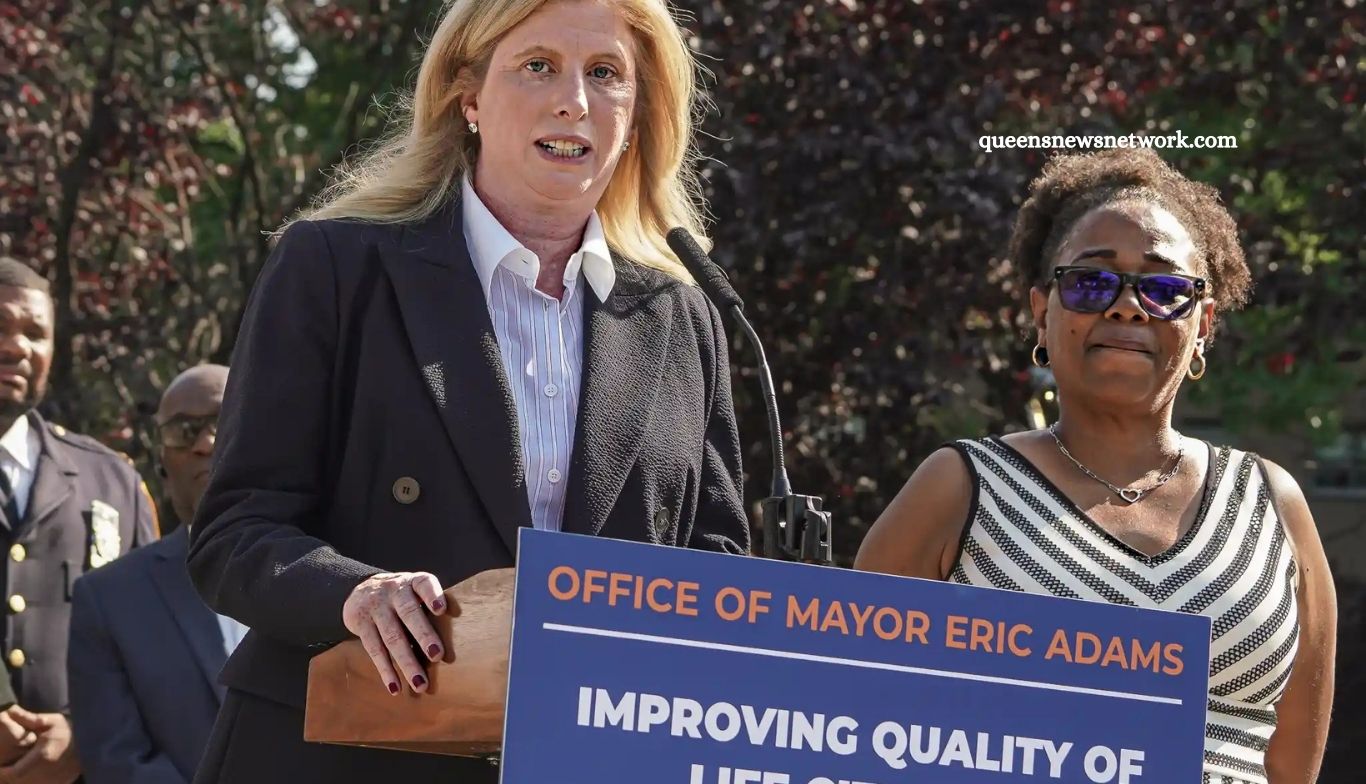
Mayor Eric Adams and NYPD Commissioner Jessica Tisch announced Monday that the NYPD’s Quality of Life Team, known as Q-teams, has officially expanded to cover the entire borough of Queens.
Initially launched as a pilot program in Brooklyn’s 60th Precinct, Q-teams focus on addressing issues that affect daily life for New Yorkers. While these units respond to serious crimes when encountered, their primary mission is to improve neighborhood conditions by tackling abandoned vehicles, public drug use, homeless encampments, illegal vending, loud noise, and other community concerns.
The pilot program expanded across Brooklyn and Manhattan earlier this year. Now, Queens residents will also benefit from the initiative aimed at restoring public order and enhancing the quality of life across city neighborhoods.
Read More: Israeli Strike Kills Al Jazeera Journalists in Gaza, Press Freedom Advocates Condemn Attack
Addressing Longstanding Neighborhood Concerns
Commissioner Tisch emphasized the importance of addressing problems that quietly erode a community’s sense of safety. Speaking at the Astoria Houses on August 11, she said, “For too long, the kinds of problems that chip away at a block’s sense of safety have gone unaddressed. The abandoned car that hasn’t moved for months. Mopeds weaving through pedestrians, sidewalks vanishing under illegal vendors, loud music blaring deep into the night, homeless encampments lining city streets. These aren’t isolated issues, and they haven’t gone unnoticed.”
The commissioner also noted that calls to 311 have doubled over the past seven years, highlighting the growing demand for timely municipal responses to quality-of-life issues.
Early Success of Q-Teams
Since their launch in April, the Q-teams have already demonstrated measurable results. According to Commissioner Tisch, the units have responded to more than 31,000 311 and 911 calls. They have towed over 700 abandoned vehicles, seized more than 300 illegal mopeds and e-bikes, and cleared 1,412 homeless encampments.
In addition to these actions, the Q-teams have improved NYPD response times to non-emergency complaints by an average of 47 minutes. This represents a significant enhancement in the city’s ability to address concerns before they escalate.
Responding to Criticism
Despite its successes, the Q-team program has faced some criticism. Detractors have labeled the initiative as a return to “zero-tolerance” or overactive policing. Commissioner Tisch pushed back against this characterization, clarifying the program’s intent.
“Some critics have tried to misrepresent this approach, calling it a return to zero-tolerance policing, but that is a fundamental mischaracterization of what we’re doing here. This isn’t about preventing future crime—it’s about restoring present order. That means responding to the problems people are actually living with and making sure they get fixed. That’s exactly what the people of Queens will get starting today. We’re building the infrastructure to take on these challenges consistently as part of the department’s everyday work,” Tisch said.
She added, “It’s hard to measure quality of life, but you know when it’s missing and you know when it’s been restored.”
Community Response
Residents of Queens have welcomed the arrival of Q-teams. Kimberly Elliott, President of the Astoria Houses Tenant Association, described the challenges her community has faced and the relief Q-teams bring.
“I’ve lost sleep because of loud noises from my window. I felt uneasy walking into my building because of drug use in the buildings. We’re in danger from unauthorized vehicles speeding through our development. Many of us have to grab our children out of harm’s way to avoid them getting hit by e-bikes,” Elliott said. “This is not just a nuisance—it’s a health hazard. These aren’t small inconveniences.”
Her comments underline the tangible benefits of having dedicated units focused on everyday safety concerns, from noise disturbances to unsafe streets.
Frequently Asked Questions
What are Q-teams?
Q-teams are specialized NYPD units focused on addressing quality-of-life issues in neighborhoods. While they respond to serious crimes when encountered, their primary goal is to improve daily life by tackling problems such as abandoned vehicles, illegal vending, public drug use, noise complaints, and homeless encampments.
Why were Q-teams introduced?
The NYPD introduced Q-teams to respond to long-standing issues that affect residents’ sense of safety and neighborhood livability. Calls to 311 have doubled in the past seven years, signaling a growing demand for timely interventions in non-emergency situations.
Where did the Q-team program start?
The pilot program began in Brooklyn’s 60th Precinct in April. It later expanded to the entire borough of Brooklyn and Manhattan before its launch in Queens. Staten Island is expected to receive Q-teams in the near future.
Are Q-teams a form of “zero-tolerance” policing?
No. Commissioner Tisch emphasized that Q-teams are not about punitive policing or preventing future crime. Their focus is on restoring present order and directly addressing issues residents face daily.
How are residents reacting to Q-teams in Queens?
Many residents, including community leaders like Kimberly Elliott of Astoria Houses, have welcomed Q-teams. They cite improvements in safety, reduced noise, and better management of illegal and hazardous activity in their neighborhoods.
Will Q-teams be in all five boroughs?
Yes. Currently, Q-teams operate in Brooklyn, Manhattan, and Queens. Staten Island is expected to receive the program soon, completing citywide coverage.
Conclusion
The expansion of NYPD Q-teams to Queens marks a significant step in improving the daily lives of New Yorkers. By addressing issues such as abandoned vehicles, public drug use, illegal vending, and homeless encampments, these specialized units focus on restoring order and safety in neighborhoods. Early results in Brooklyn and Manhattan demonstrate measurable improvements in response times and community well-being.