

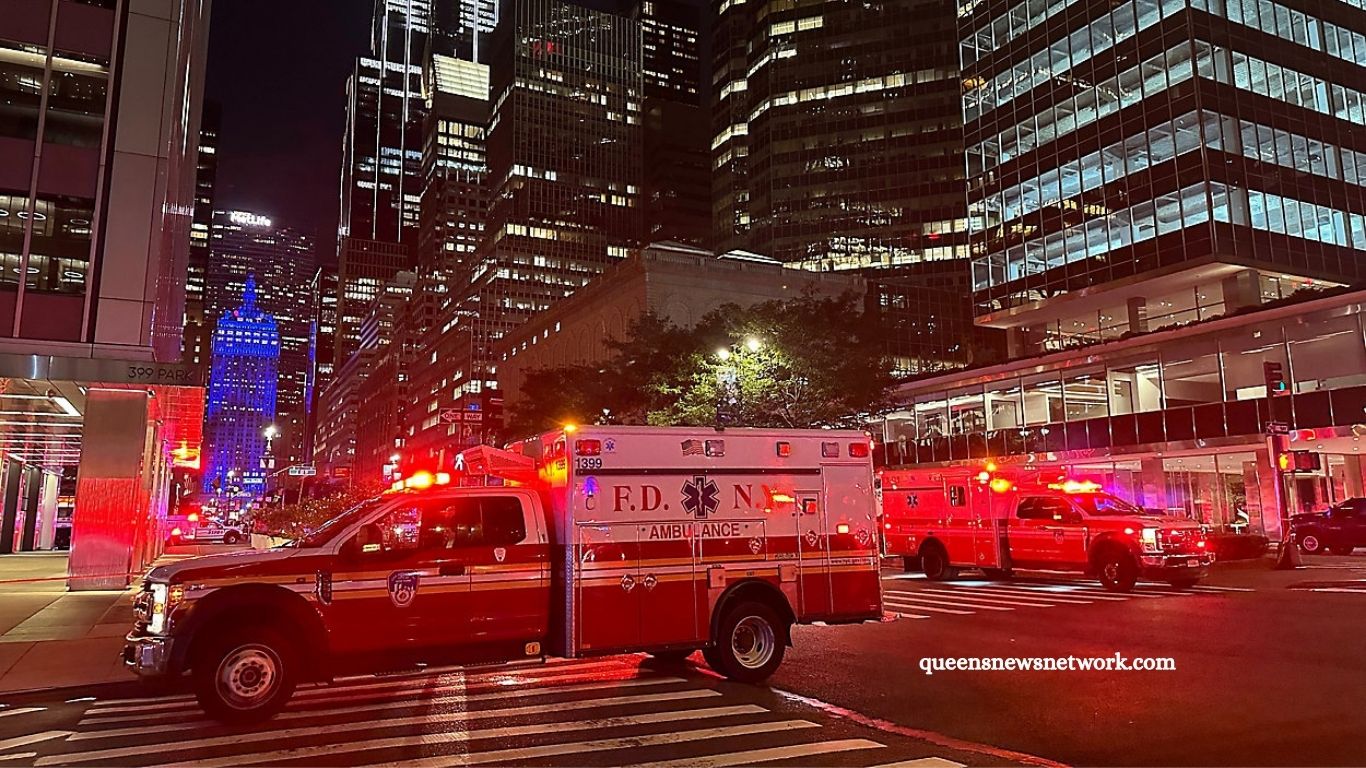
Shane Tamura, a 27-year-old former high school football player, carried out a deadly mass shooting at a Manhattan office tower housing NFL offices, leaving four people dead before taking his own life. New details released by Las Vegas police reveal that Tamura suffered from mental health issues, believed he had CTE (chronic traumatic encephalopathy), and blamed the NFL for hiding the dangers of brain injuries linked to contact sports.
Although he never played professionally, Tamura’s history of concussions, depression, and insomnia painted a disturbing portrait of untreated trauma. This tragedy underscores the growing concerns around sports-related brain injuries, mental health, and gaps in firearm regulations raising difficult but necessary questions about accountability, prevention, and support for those struggling in silence.
Read More: Queens E-Bike Rider Killed in SUV Collision
History of Mental Health Struggles and Sports-Related Injuries
Tamura, a former high school football player from Southern California, was never a professional athlete. However, his mother told 911 dispatchers during a 2022 mental health crisis that her son had suffered from a concussion and other persistent neurological symptoms linked to his time playing football. The incident, now brought to light through bodycam footage and dispatch recordings, took place outside a Budget Suites Motel, where Tamura’s mother made a quiet plea for help while trying not to alert her son.
“He said he’s going to kill himself,” she told the dispatcher during the call on September 12, 2022. “He didn’t say he made a plan, he just said he just can’t take it anymore.”
Tamura’s mother revealed that he was under medical supervision for depression, concussion-like symptoms, chronic migraines, and insomnia. She also expressed concern over his marijuana use, reliance on sleeping pills, and access to a firearm he kept in his backpack.
That crisis was one of at least two serious mental health episodes that led to Tamura being admitted to psychiatric facilities. In another recorded event from 2024, Tamura contacted his mother and made concerning statements about harming himself. That call resulted in another hospital admission under a mental health crisis hold.
The Note and the Tragic Manhattan Attack
On the day of the shooting, Tamura was found carrying a handwritten note in his wallet stating he believed he had CTE—a degenerative brain disease often linked to repeated head trauma. CTE has been a growing concern in contact sports, especially football, due to its severe mental health effects, including mood disorders, memory loss, aggression, and suicidal thoughts.
Although Tamura was never diagnosed, the note suggested he believed his ongoing mental and physical issues stemmed from his time on the football field. He blamed the NFL for concealing the long-term effects of such injuries, according to Las Vegas police.
The violent attack unfolded in shocking fashion. Tamura entered the Manhattan building, which houses NFL offices, and fatally shot three people in the lobby. He then took the elevator to the 33rd floor, where he killed a fourth victim before ending his own life.
Investigators later confirmed that Tamura had worked in the surveillance department at the Horseshoe Las Vegas casino until just days before the attack. He had recently purchased both the rifle used in the shooting and the vehicle he drove to New York from his supervisor at the casino.
Evidence Found in Locker and Apartment
Following the attack, detectives searched Tamura’s locker at the Horseshoe casino and uncovered a troubling cache. Inside, police found a tripod intended for use with his rifle, ammunition, and the box for a revolver later discovered in his vehicle. Additional ammunition for both weapons was also recovered.
At Tamura’s Las Vegas apartment, police discovered several prescription medications, including a psychiatric drug, an epilepsy treatment, and an anti-inflammatory. These findings further confirmed the extent of Tamura’s mental and neurological health challenges.
Despite his medical history, Tamura was able to legally purchase firearms, as no extreme risk protection order (commonly referred to as a “red flag law”) had been initiated by family members or law enforcement. Under existing laws at the time, his past hospitalizations did not automatically prevent gun ownership.
However, a new state law that took effect this month now permits officers to temporarily seize firearms from individuals placed under an involuntary mental health hold. The change aims to close gaps in firearm access for those at risk of harming themselves or others.
Prior Legal Troubles and Warning Signs
In addition to his mental health issues, Tamura had previous encounters with law enforcement. In 2023, he was arrested for trespassing at a casino after refusing to show identification while attempting to collect gambling winnings. According to security personnel, he became agitated and combative when asked to leave.
In 2024, he was cited again, this time for driving without a license and operating an unregistered vehicle. While these incidents may have seemed minor at the time, they now appear to be part of a larger pattern of instability that escalated toward the final act of violence in New York City.
Police Justify Record Release Due to “Extraordinary Circumstances”
Given the severity and public interest surrounding the case, the Las Vegas Metropolitan Police Department made the rare decision to release records typically protected by privacy laws. Officials stated that the release was justified due to the “extraordinary circumstances” and the importance of transparency in understanding what led to the deadly mass shooting.
The tragedy has once again ignited discussions about the long-term effects of contact sports on mental health, the need for better access to psychiatric care, and the importance of closing loopholes in firearm regulations for individuals suffering from mental illness.
A Community and Nation Seeking Answers
The mass shooting at the Manhattan office tower—especially with its ties to the NFL—has left both the victims’ families and the broader public searching for answers. Tamura’s apparent belief that football-related head trauma caused his suffering is a sobering reminder of the complex intersection between mental health, sports, and gun violence.
As more details emerge, the case continues to highlight the urgent need for comprehensive mental health support systems, responsible firearm policies, and greater accountability around brain injuries in contact sports.
Keywords for SEO Optimization: Shane Tamura, NFL shooting, Manhattan office tower shooting, CTE brain injury, sports-related concussion, mental health crisis, gun violence, Las Vegas police, chronic traumatic encephalopathy, football brain injury risks, red flag law, mass shooting NYC, NFL mental health.
Frequently Asked Questions
Who was Shane Tamura?
Shane Tamura was a 27-year-old former high school football player from Southern California with a documented history of mental health issues. He was responsible for a mass shooting at a Manhattan office tower housing NFL offices, killing four people before taking his own life.
Did Shane Tamura have a history of mental illness?
Yes. Tamura had been hospitalized multiple times for mental health crises. According to his mother and police records, he suffered from depression, chronic migraines, insomnia, and possible concussion-related symptoms.
What is CTE and did Tamura have it?
Chronic Traumatic Encephalopathy (CTE) is a brain disease linked to repeated head trauma, often found in athletes involved in contact sports. While Tamura was not officially diagnosed, he left a note claiming he believed he had CTE and blamed the NFL for covering up the risks associated with football-related brain injuries.
Was Shane Tamura a professional football player?
No. Tamura played football only during high school. However, he believed the sport had caused long-term neurological damage, contributing to his mental decline.
How did Tamura obtain his firearms legally?
Despite his psychiatric history, Tamura was able to legally purchase firearms. At the time, no extreme risk protection order had been issued by family or law enforcement, which would have restricted his access to guns.
What new laws could have prevented this?
A new state law, which took effect just weeks after the shooting, allows authorities to confiscate firearms from individuals placed under an involuntary mental health hold. This “red flag” law aims to prevent similar tragedies by closing legal loopholes.
What evidence was found after the attack?
Police found a note referencing CTE in Tamura’s wallet, along with weapons, ammunition, and psychiatric medications in his car, locker, and apartment. These findings further supported his deteriorating mental health.
Conclusion
The tragic shooting carried out by Shane Tamura highlights the complex and often overlooked intersection of mental health, sports-related brain injuries, and gun access. Though Tamura never played professional football, his belief that he suffered from CTE and his resentment toward the NFL for allegedly concealing the risks of concussions point to a deeper crisis facing athletes and society alike.