

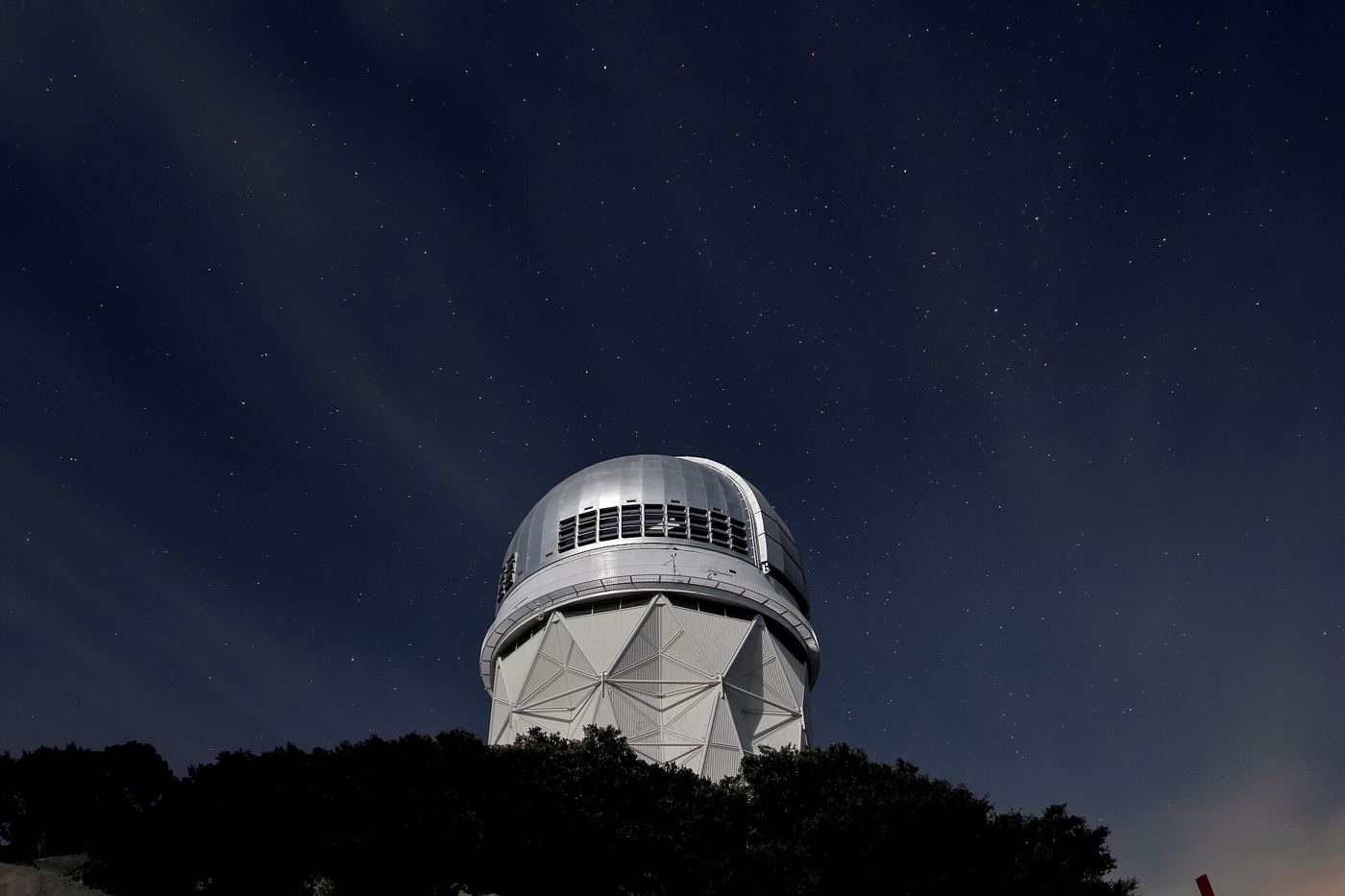
For centuries, astronomers could only wonder what the planets around other stars might be like. Now telescopes are beginning to read their skies. When a distant planet passes in front of its star, a tiny fraction of the starlight filters through the planet’s atmosphere, and the colours that are absorbed reveal which gases are present. Powerful new observatories can measure that filtered light with enough precision to detect water vapour, carbon dioxide and methane in the atmospheres of worlds many light years away. The technique has already produced surprises, including planets with clouds of unexpected composition and atmospheres far hotter than models predicted. Even the largest telescopes collect only a trickle of that light, so every observation must be planned carefully. Each measurement is a puzzle piece, helping scientists understand how planets form and whether any of them could support conditions suitable for life. The work is painstaking, since the atmospheric signal is a minute fraction of the star’s brightness.
What the Evidence Shows
The next step is to study smaller, rocky planets, the kind most likely to resemble Earth. These worlds are harder targets, because their thin atmospheres produce fainter signals and their stars are often active, with flares and spots that can mimic or hide the planet’s signature. Astronomers are developing methods to separate the planet’s signal from the star’s noise, observing the same world repeatedly and combining the results. They are also targeting planets in the habitable zone, where liquid water could exist, and comparing them with lifeless neighbours to learn what keeps a planet habitable. Some teams are looking for combinations of gases that would be hard to explain without biology, while others caution that geology alone can produce many of the same signatures. Researchers say the field is still young, but for the first time in history, the question of whether other Earth-like worlds exist is becoming one that can be answered with data rather than speculation. Reporting and analysis from sources such as Nature track the same developments, and specialists following the distant planet atmospheres say the direction is now consistent across independent lines of evidence.
The Wider Context
The wider context is a research landscape in which replication and open data now decide reputations. Findings connected to the distant planet atmospheres are being checked by independent groups with shared datasets, and the teams involved publish their methods in full so rivals can test every step. That discipline is slower than a headline cycle, but it is why results in this area increasingly survive first contact with scrutiny.
What Happens Next
What happens next in the story of the distant planet atmospheres will be decided by follow-up work already under way: larger samples, longer observation and instruments that have not yet come online. The researchers involved are unusually united on one point, that the current results justify the next investment of time and money. Readers will not have to wait long for the first tests of that claim. You can follow related developments in our coverage of science.
None of this will be settled by a single announcement, study or product launch. The pattern to watch is accumulation: independent confirmations, honest reporting of failures and steady improvement in the underlying numbers. Readers who follow those signals, rather than the loudest claim of the week, will understand this subject better than most of the commentary surrounding it suggests is possible.
