

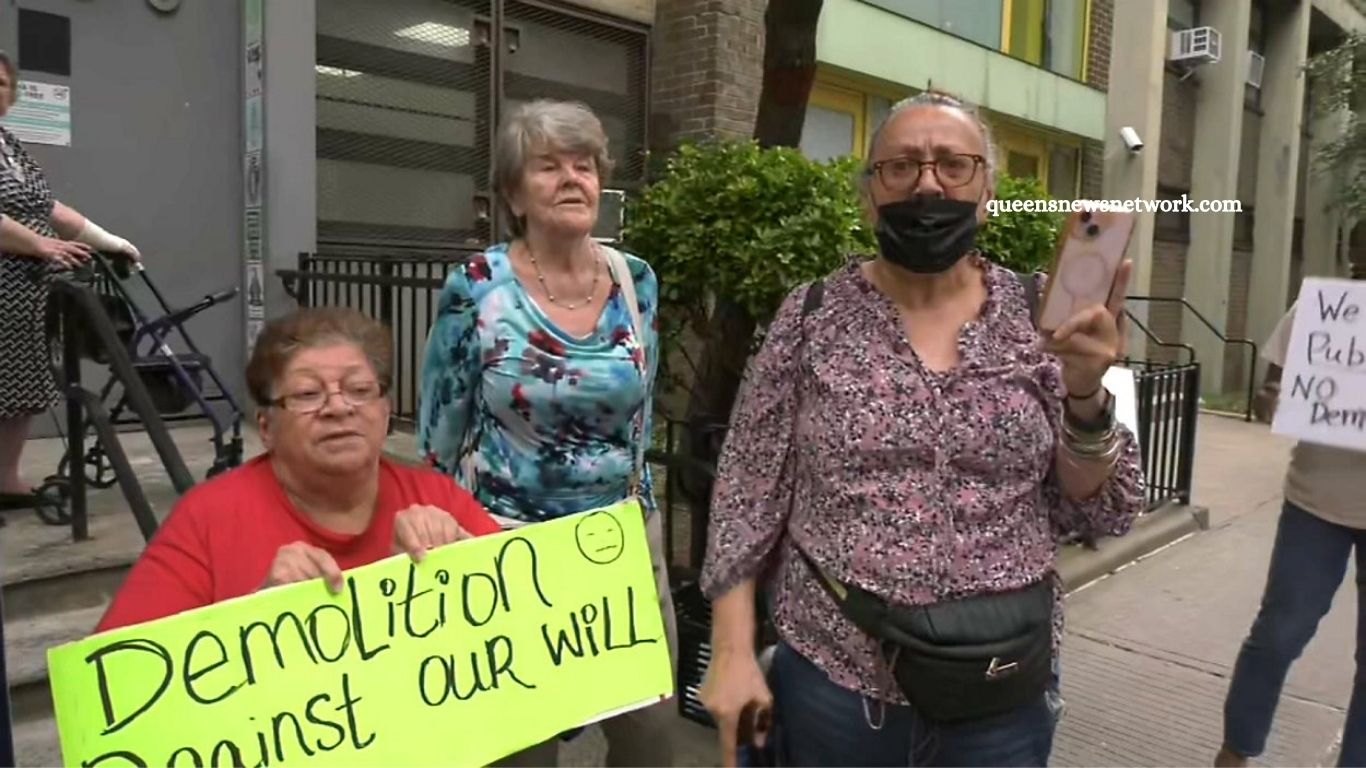
In the heart of Manhattan’s Chelsea neighborhood, dozens of elderly residents in New York City Housing Authority (NYCHA) apartments are rallying to protect the place they call home. After receiving 90-day notices to vacate their building, these seniors face an uncertain future — and they’re determined to resist relocation.
On West 27th Street, outside the Chelsea Addition, chants of “Save our homes!” echoed through the air. The voices belonged to residents in their 70s and 80s, many of whom have lived in the senior-only complex for years. They say moving would not only uproot their lives but dismantle the close-knit community they’ve built.
Fear of Losing More Than an Address
“We can’t sleep every night,” said 79-year-old resident Yu Story. “It’s scary right now. Nights, just thinking, thinking, thinking. It’s making people depression more and more.”
Story’s neighbor, 78-year-old Diana Chew, shared a similar sentiment. Both women previously lived in NYCHA buildings where safety was a constant concern. Four years ago, when they moved into the Chelsea Addition, the relief was immediate. The building, reserved solely for seniors, offered a sense of security and companionship they had long been missing.
“Everybody is my friend here — like a family, a big family,” Chew said, her voice breaking. “I don’t want to leave.”
But leaving may soon be unavoidable.
Read More: Democrats Struggle to Reform New York Redistricting Laws
Why the Seniors Are Being Asked to Move
NYCHA’s 90-day vacate order is tied to a massive redevelopment project. The agency is replacing and modernizing two aging complexes — the Fulton Houses and the Elliot-Chelsea Houses — as part of a public-private partnership aimed at improving living conditions. The new construction will include mixed-age housing, with certain floors designated exclusively for seniors.
To complete the work, all 79 households in the Chelsea Addition must relocate to temporary housing for an estimated three years.
According to Jamar Adams, founder of Essence Development, the temporary units were designed with residents’ input. “This is the renovated kitchen, or the refreshed kitchen as we call it, that was designed by the residents,” Adams told NY1 during a tour of a model apartment. The units are located on the same Chelsea campus, meaning residents would not be far from their current location.
NYCHA officials say more than two dozen seniors have already agreed to move into the updated apartments.
Safety Concerns Over Temporary Housing
But for Chew, the offer comes with a painful dilemma. Her assigned temporary unit is in her old building — the one she was relieved to leave behind.
“I don’t want to move to the same place before,” she said. “It was no good. Totally no good. They had a robbery and a gunfight. I’m so scared. I’m really scared for that.”
Recognizing residents’ safety concerns, NYCHA’s Chief Real Estate Officer, Jonathan Gouveia, emphasized that the agency is addressing security issues head-on. “Security is one of their issues,” Gouveia said. “So we are going to include Ring cameras on the front door of every apartment. We want to make sure the residents feel comfortable.”
Developers also plan to add roving patrols and a staffed security booth. Yet, some residents remain unconvinced that these measures will erase years of fear associated with their former buildings.
Emotional and Social Impact of Relocation
Housing advocates warn that the physical move is only part of the problem. For seniors, relocation can bring emotional stress, health risks, and a loss of social ties.
“These are people in their late 70s and 80s who have built routines and relationships that support their daily lives,” said one advocate working with the group. “Moving them, even temporarily, can lead to isolation, depression, and physical decline.”
For many at Chelsea Addition, the building isn’t just a residence — it’s a lifeline. Neighbors check in on each other, share meals, and provide companionship. Separating them, even across a few blocks, could disrupt that fragile support system.
Legal Action on the Horizon
In response to the planned relocation, housing advocates have begun discussing potential legal strategies to delay the move. While no lawsuit has yet been filed, meetings with residents are ongoing. The group hopes to negotiate a solution that allows seniors to remain in place until their new, permanent homes are ready.
NYCHA has not indicated whether construction timelines could be adjusted to accommodate such requests.
The Larger Redevelopment Picture
The redevelopment of the Fulton and Elliot-Chelsea Houses is part of a broader NYCHA initiative to address the city’s aging public housing stock, much of which suffers from decades of underfunding and disrepair. The new mixed-income, mixed-age model is designed to attract investment while preserving affordability for existing residents.
Proponents argue that these upgrades are long overdue and that temporary disruption is a necessary step toward long-term improvement. Critics counter that the process too often disregards residents’ needs, especially those of vulnerable populations like seniors.
For the Chelsea Addition community, the issue isn’t whether upgrades are necessary — it’s about how the transition is handled.
A Fight for Dignity and Stability
Standing outside the Chelsea Addition, residents held signs and chanted, drawing attention to their cause. The protest was as much about dignity as it was about housing.
“We’re not against change,” Story said. “We just don’t want to be put in danger or lose our family here.”
The coming months will be critical. If the vacate orders stand, residents must pack up their lives and move by the deadline. If legal action succeeds, they may win more time — and possibly a chance to negotiate safer, more acceptable relocation options.
Until then, the seniors of Chelsea Addition are making their voices heard, refusing to quietly surrender the community they’ve worked so hard to build.
Frequently Asked Questions
Why are NYCHA seniors in Chelsea being asked to move?
The seniors living in the Chelsea Addition received 90-day vacate notices because NYCHA is redeveloping the Fulton Houses and Elliot-Chelsea Houses. The project aims to replace outdated buildings with modern, mixed-age housing, with some floors designated exclusively for seniors.
How long will the relocation last?
According to NYCHA, the relocation is temporary but expected to last more than three years while construction is completed.
Where will the seniors be relocated?
Most seniors are being offered temporary apartments within the same Chelsea campus. However, some are concerned that the assigned units are in their previous buildings, where they experienced safety issues.
What are the main concerns of the residents?
Residents worry about safety in the temporary housing, loss of their close-knit community, and the emotional and physical toll of relocation. Many also fear that the temporary move could become permanent.
What safety measures are being promised?
NYCHA has pledged to install Ring doorbell cameras on every apartment, add roving security patrols, and staff a security booth in the temporary housing.
Are residents taking legal action?
Housing advocates are in discussions with seniors about possible legal action to delay the relocation. No official lawsuit has been filed yet, but community meetings are ongoing.
Will the redeveloped buildings still have senior-only housing?
Yes. NYCHA says the new buildings will include consecutive floors specifically for senior residents, in addition to units for residents of all ages.
Conclusion
The fight of NYCHA seniors in Chelsea is more than a dispute over relocation — it’s a struggle for safety, stability, and dignity in the face of sweeping redevelopment. While NYCHA promises modernized housing and improved living conditions, many residents fear losing the security and sense of community they’ve built over years. As legal discussions continue and deadlines loom, the voices of these seniors highlight a critical question for New York City.