

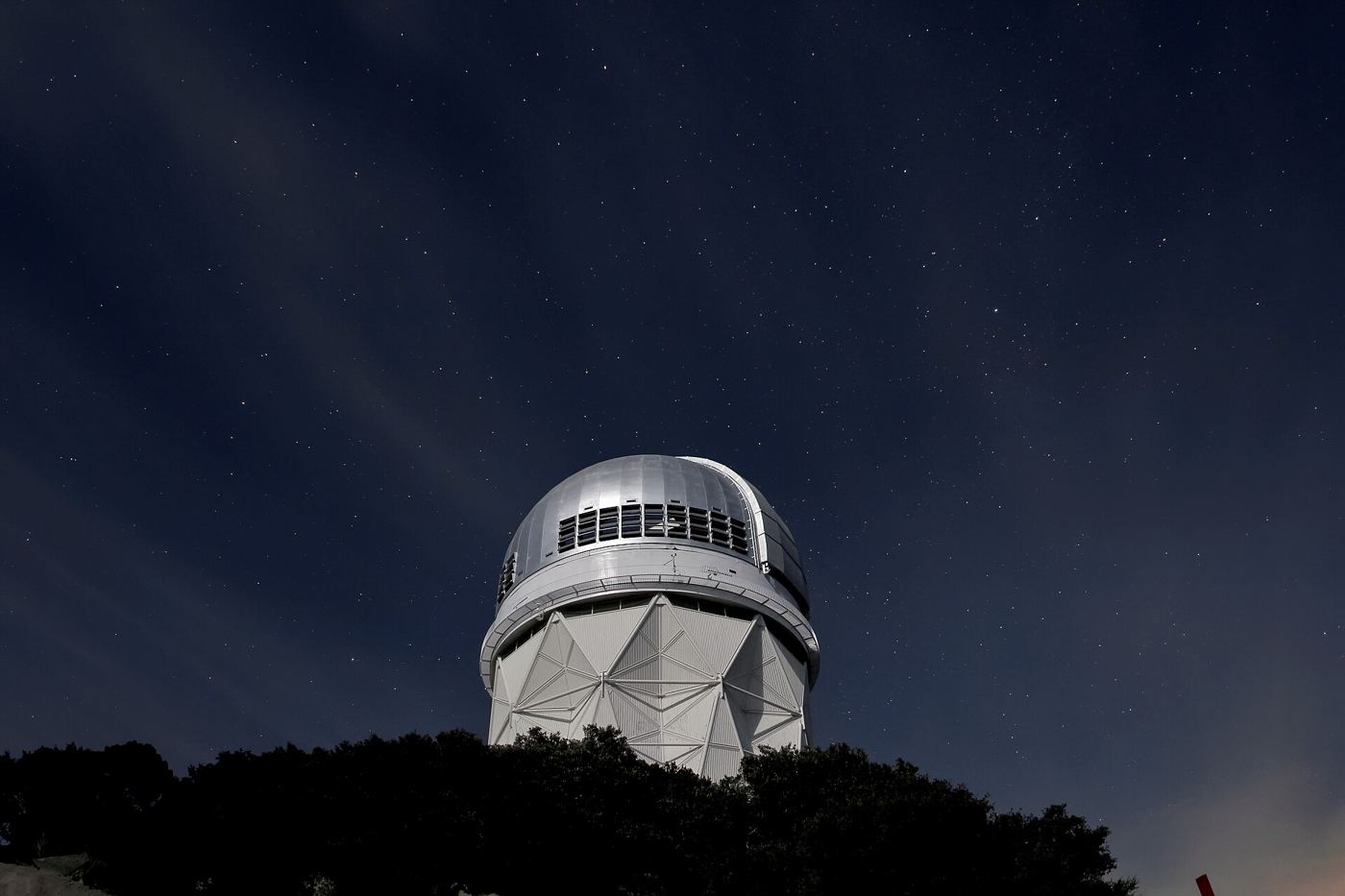
Astronomers are beginning to treat the largest exoplanets not as static points of data but as worlds with changing weather. A new survey using ground and space telescopes revisits a set of gas giant planets repeatedly, watching their brightness rise and fall as clouds, storms and hot spots rotate in and out of view. Those variations, measured across several wavelengths, reveal how heat moves around a planet that may be permanently locked with one side facing its star. On such worlds, winds can drag the hottest region away from the point directly under the star, and the size of that shift tells researchers how efficiently the atmosphere redistributes energy. Repeated observations also catch changes between visits, suggesting storms forming, dissipating or drifting over months. Building this kind of long-term record requires careful calibration, because instrumental effects can mimic the subtle signals astronomers are chasing. The survey team therefore observes reference stars alongside every target, so genuine planetary changes can be separated from telescope behaviour.
What the Evidence Shows
Weather records for exoplanets are still crude compared with forecasting for Earth, but they test the same physical models in far more extreme conditions. Giant planets with temperatures above a thousand degrees challenge assumptions about clouds, chemistry and circulation that were developed for cooler solar system worlds. When models fail to match the observed light patterns, scientists learn which ingredients are missing, whether that is the effect of vaporised rock clouds, magnetic drag or chemistry driven by intense starlight. The survey also helps prioritise targets for detailed spectroscopic study, since planets showing clear atmospheric signals reward the limited observing time available on flagship telescopes. Over the coming years, combining repeated photometry with spectra should allow researchers to map temperature and cloud cover across entire hemispheres. What begins as flickering light from an unresolved point is gradually becoming meteorology for other worlds, and each season of data makes the comparison with Jupiter, Saturn and the solar system’s other giants more informative. Reporting and analysis from sources such as Nature track the same developments, and specialists following changing weather patterns on distant giant planets say the direction is now consistent across independent lines of evidence.
The Wider Context
The wider context is a research landscape in which replication and open data now decide reputations. Findings connected to changing weather patterns on distant giant planets are being checked by independent groups with shared datasets, and the teams involved publish their methods in full so rivals can test every step. That discipline is slower than a headline cycle, but it is why results in this area increasingly survive first contact with scrutiny.
What Happens Next
What happens next in the story of changing weather patterns on distant giant planets will be decided by follow-up work already under way: larger samples, longer observation and instruments that have not yet come online. The researchers involved are unusually united on one point, that the current results justify the next investment of time and money. Readers will not have to wait long for the first tests of that claim. You can follow related developments in our coverage of science.
None of this will be settled by a single announcement, study or product launch. The pattern to watch is accumulation: independent confirmations, honest reporting of failures and steady improvement in the underlying numbers. Readers who follow those signals, rather than the loudest claim of the week, will understand this subject better than most of the commentary surrounding it suggests is possible.
